

Not all coconut shell activated carbon is the same. Two bags can look identical on the outside and perform completely differently once you put them to work. The difference comes down to measurable quality specs—and if you don’t know how to check them, you’re buying blind. This guide walks you through the four tests that tell you exactly what you’re getting.
At Yanshan Carbon, we’ve spent over 35 years making and testing activated carbon. Our lab follows GB/T series standards, and we run every batch of coconut shell activated carbon through a full quality check before it ships. We know these tests inside and out because we use them every single day. And once you understand what each test measures and why it matters, you’ll make smarter buying decisions every time you place an order.
Before we get into the four tools, here’s the bottom line: activated carbon quality comes down to how well it adsorbs, how long it lasts under mechanical stress, how dry it is, and how pure its carbon content is. Each of the four tests below targets one of those factors. Skip any one of them, and you’re missing part of the picture.
Why You Need to Test Before You Buy
Here’s the reality of the activated carbon market: specs on a product sheet don’t always match what shows up at your door. Raw material quality varies from batch to batch. Production methods differ between manufacturers. And storage conditions during shipping can change the product before you even open the bag. Testing gives you hard numbers you can compare, verify, and hold your supplier accountable to.
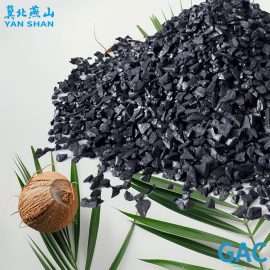
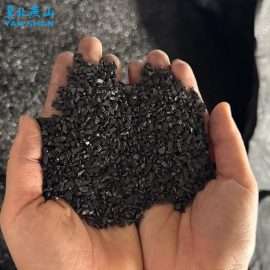
Whether you’re using coconut shell activated carbon for gold recovery, water purification, air filtration, or food and beverage processing, the performance of your carbon depends on a few measurable properties. Key tests include iodine number, ash level, surface area, and hardness. These aren’t just lab curiosities—they directly affect how much your carbon adsorbs, how long it lasts in your system, and how much you spend on replacements. A water treatment plant running carbon with a low iodine number won’t hit its contaminant removal targets. A gold mine using carbon with poor hardness will lose gold to fines that break off during the CIP or CIL process. The numbers matter.
Testing also protects you from overpaying. If a supplier charges premium prices but delivers carbon with mediocre specs, you’ll only know if you test. And if you’re comparing quotes from multiple suppliers, test results are the only way to make an apples-to-apples comparison. Price per kilogram means nothing if the carbon in one bag performs 20% better than the other. At our facility, we test every production batch and can provide a certificate of analysis for any shipment—because we know that buyers who test their carbon are buyers who come back.
Iodine Number Test
The iodine number test is the single most common quality check for activated carbon. If you only run one test, this is the one.

In plain terms, the iodine number tells you how much adsorption capacity your carbon has. The amount of iodine absorbed (in milligrams) by 1 g of carbon using test conditions listed herein is called the iodine number.A higher number means more micropores are available to grab onto contaminants, gold particles, or whatever else you need your carbon to capture. The iodine number typically ranges from 500 to 1200 mg/g for commercial activated carbons. For quality coconut shell activated carbon, you should expect numbers in the 900–1,200 mg/g range. At Yanshan, our coconut shell products routinely test between 900 and 1,200 mg/g when freshly produced. If a supplier can’t tell you the iodine number, or if the number comes back below 800 mg/g, that’s a red flag.
The test itself works by mixing a weighed carbon sample with an iodine solution, then measuring how much iodine the carbon pulls out of that solution through titration. It measures iodine number as a measure of micropore content. It is applicable to powdered and granular activated carbon. It’s a straightforward lab procedure that takes a few hours. Most activated carbon testing labs in the U.S. can run it, and the cost is low relative to the value of the information you get back. If you’re buying in bulk, ask your supplier for the iodine number on every batch certificate. If you want to verify independently, pull a sample from the shipment and send it to a third-party lab.
One thing to keep in mind: the iodine number is a relative indicator of porosity in an activated carbon. It does not necessarily provide a measure of the carbon’s ability to absorb other species. That means a high iodine number is a strong signal of quality, but it’s not the whole story. You still need the other three tests to get a full picture—especially for demanding applications like gold recovery, where hardness and ash content matter just as much.
Ball-Pan Hardness Test
Hardness tells you how well your carbon holds up under physical stress. In real-world systems—gold recovery circuits, backwashing water filters, packed bed adsorbers—activated carbon gets knocked around constantly. If it breaks apart into fines, you lose product, clog screens, and in gold mining, you lose gold. In applications where activated carbon is subjected to mechanical stress, such as in water treatment systems with backwashing, air filters with pulsed airflow or packed beds with high flow rates, a higher hardness is desired to minimise the production of fines and to maintain the performance of the carbon over time. In gold recovery in gold mines, where coconut shell activated carbon is used, there are also high requirements for activated carbon hardness.
GB/T12496.6-1999 covers a procedure for determining the ball-pan hardness number of granular activated carbons. For the purpose of this test, granular activated carbons are those having particles 90% of which are larger than 80 mesh. The way it works is straightforward: a sample of activated carbon is subjected to a specific number of rotations in a ball mill containing a certain number of steel balls. Upon completion of the test, the amount of carbon left on the specified sieve is used to calculate the hardness percentage. A higher hardness percentage means the carbon resists breaking down better. Coconut shell activated carbon naturally has high hardness compared to coal-based or wood-based alternatives—it’s one of the main reasons mines and water treatment plants prefer it. Quality coconut shell carbon should test at 95% hardness or above, with premium grades hitting 97–99%.
Several methods have been employed in the past for determining the resistance of activated carbons to particle size degradation under service conditions, including the ball-pan method, the stirring bar method, and the dust elutriation method. None of these has proved completely satisfactory for all applications. However, the ball-pan method has been used widely in the past and has a broad history in the activated carbon industry for measuring the property loosely described as “hardness.” Despite its limitations, it remains the go-to standard in the industry. When you’re comparing products from different suppliers, the ball-pan hardness number gives you a reliable way to see which carbon will last longer in your system before needing replacement. For gold recovery operations especially, where carbon cycles through adsorption, elution, and reactivation over and over, hardness directly affects your cost per ounce of gold recovered.
Moisture Content Test
Moisture content is one of the easiest quality checks—and one of the most overlooked. When you buy activated carbon, you’re paying by weight. If that weight includes 15% water instead of 5%, you’re paying for water, not carbon. Beyond the cost issue, excess moisture directly reduces adsorption performance because water fills up the pores that should be available for your target contaminant.

The moisture content of activated carbon is often required to define and express its properties in relation to the net weight of the carbon. The moisture content of activated carbon packed in typical shipping containers will usually increase during transportation and storage. Users of activated carbon in applications where low moisture content is important should be aware of this effect. This is exactly why we recommend testing moisture on arrival, not just relying on the spec sheet from the factory. If you want to learn more about how storage conditions affect moisture—and how to prevent it—check out our guide to storing coconut shell activated carbon.
Ash Content Test
Ash content measures the non-carbon mineral residue left behind when you burn activated carbon at high temperature. In specific end uses, the amount and composition of the ash may influence the capabilities and certain desired properties of activated carbon. High ash means more impurities, which reduces adsorption performance, can increase conductivity in sensitive applications, and may introduce unwanted minerals into your process.
This test method describes a procedure for the determination of total ash content of activated carbon. The ash is determined by heating a weighed dried sample at 650 ± 25°C for three to 16 hours until constant weight is obtained. What’s left after everything burns away is the ash, and you express it as a percentage of the original sample weight. Coconut shell activated carbon is known for having low ash content compared to coal-based carbon—typically under 5%, and often under 3% for premium grades. This is one of the reasons coconut shell carbon outperforms other types in applications that demand high purity, like drinking water treatment, pharmaceutical processing, and food-grade filtration.
If you’re buying for gold recovery, ash content matters because excess minerals can interfere with the adsorption and elution process. For water treatment, high ash can cause pH spikes when the carbon first contacts water. Historically, the ash was thought to be responsible for the 1-3 pH unit rise when carbon was put into water. The present thought for this pH phenomena is that the carbon surface has hetero-atoms which bind protons resulting in the pH increase until these active sites are satisfied. This pH rise can last until 200-300 bed volumes have passed through the GAC. Either way, lower ash means cleaner carbon, better performance, and fewer headaches during operation.
Quality Specs at a Glance
Here’s a quick reference table showing what to look for when you’re evaluating coconut shell activated carbon from any supplier. These are the numbers we hold ourselves to at Yanshan, and they’re the same numbers you should demand from whoever you buy from.
| Test | GB/T Standard | What It Measures | Target Range (Coconut Shell) |
|---|---|---|---|
| Iodine Number | GB/T12496.8-2015 | Micropore volume / adsorption capacity | 900–1,200 mg/g |
| Ball-Pan Hardness | GB/T12496.6-1999 | Resistance to mechanical degradation | ≥ 95% (premium: 97–99%) |
| Moisture Content | GB/T12496.4-1999 | Water content by weight | 5–10% (max 12% on arrival) |
| Ash Content | GB/T12496.3-1999 | Non-carbon mineral residue | < 5% (premium: < 3%) |
If a product hits all four of these targets, you’re looking at high-quality coconut shell activated carbon that will perform well in gold recovery, water purification, air treatment, and other demanding applications. If it misses on one or more, you need to ask your supplier why—and whether the price reflects the lower quality.
How to Use These Tests When Buying
Knowing what these tests measure is one thing. Using them to make better buying decisions is another. Here’s our advice based on decades of working with buyers across the globe.

First, always request a certificate of analysis (COA) with every shipment. A COA should list the iodine number, hardness, moisture content, and ash content for that specific production batch. If a supplier can’t provide one, that’s a serious warning sign. At Yanshan, we generate a COA for every batch that leaves our facility, and our lab results are traceable back to the specific production line and raw material lot.
Second, verify the COA with independent testing when you’re working with a new supplier. Pull a representative sample from the shipment and send it to a third-party lab. Labs follow GB/T approved standards to provide activated carbon characterization—including iodine number, hardness and abrasion, moisture and ash content, density, and particle size distribution. This one-time cost gives you confidence that the supplier’s numbers are real. Once you’ve verified a supplier over a few shipments, you can reduce the frequency of independent testing.
Third, set minimum specs in your purchase agreement. Don’t just buy “coconut shell activated carbon”—buy coconut shell activated carbon with an iodine number of at least 1,000 mg/g, hardness above 96%, moisture below 8%, and ash below 3%. Put those numbers in writing so there’s no ambiguity, and include a clause that allows you to reject shipments that don’t meet spec. This protects your operation and keeps your supplier honest.
Finally, test stored carbon before you put it into service. Even properly packaged carbon can pick up moisture over time. A quick moisture check and iodine number test on a stored bag tells you whether it’s still ready to perform. As we mentioned in our storage guide, properly stored coconut shell activated carbon keeps its quality for two to three years. But if you’re not sure, test it. A five-minute check can save you from dumping compromised carbon into a process that depends on peak performance.
FAQs
What does iodine number tell you about activated carbon quality?
The iodine number tells you how many micropores the carbon has available to adsorb contaminants. A higher iodine number means more adsorption capacity. When industries employ activated carbon, they rely heavily on its ability to trap contaminants effectively. The higher the iodine number, the more capable the carbon is in adsorbing smaller molecules. For coconut shell activated carbon, look for iodine numbers between 900 and 1,200 mg/g.
How do you test activated carbon hardness?
The standard method is the ball-pan hardness test. A carbon sample is placed in a special pan with steel balls and agitated on a Ro-Tap sieve shaker for 30 minutes. After the test, you sieve the sample and calculate the percentage retained on a specific mesh size. That percentage is the hardness number. Quality coconut shell carbon should score 95% or higher.
Can you test activated carbon quality without a lab?
Some basic checks don’t require lab equipment. You can weigh bags to check for excess moisture pickup, inspect the carbon for visible dust or fines, and smell it for chemical contamination. But for accurate iodine number, hardness, moisture, and ash content results, you need standardized lab testing.
What is a good ash content for coconut shell activated carbon?
Premium coconut shell activated carbon should have ash content below 3%. Anything under 5% is generally acceptable for most applications. Higher ash content means more mineral impurities, which can reduce adsorption performance and cause issues like pH spikes in water treatment systems. Coconut shell carbon naturally has lower ash than coal-based or wood-based alternatives, which is one reason it’s preferred for high-purity applications.
How often should you test activated carbon quality?
Test every shipment from a new supplier until you’ve built confidence in their consistency—typically three to five shipments. After that, spot-check at least one bag per pallet on every delivery. If you store carbon for more than three months before use, test moisture and iodine number again before putting it into service. For ongoing operations, periodic testing of in-service carbon helps you track performance and time your carbon changeouts correctly.