

Coconut shell activated carbon is showing up in more industries than ever before. From municipal water plants to gold mines to electric vehicle labs, this renewable material keeps proving itself as the top-performing option. In 2026, the demand is only climbing higher. Here are the seven uses you need to know about—and why they matter to your business.
Why Coconut Shells Make the Best Activated Carbon
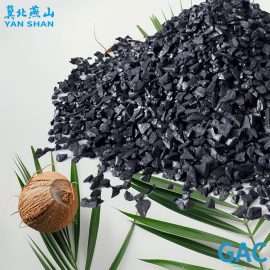
Coconut shells have a natural advantage over coal, wood, and other raw materials when it comes to making activated carbon. A combination that produces a harder, more durable end product. About 85–90% of the surface area in coconut shell activated carbon comes from micropores, which are tiny holes smaller than 2 nanometers in diameter. Those micropores are sized perfectly to trap contaminants like chlorine, VOCs, pesticides, and organic compounds from water and air. That’s the real difference between coconut carbon and its alternatives. If you want to see how shells become finished carbon, our complete coconut shell activated carbon production guide walks you through every step.
The sustainability side of this material is just as strong. Coconut shells are agricultural waste—a byproduct of the coconut food industry. Countries like the Philippines, India, Indonesia, and Sri Lanka produce millions of tons of shells every year. Instead of rotting in landfills, those shells get turned into a high-value product. Producing activated carbon from coconut shells actually has a negative CO₂ impact, since the production of 1 metric ton of standard coal-based activated carbon releases about 6 metric tons of CO₂, whereas coconut-based production prevents the CO₂ from natural shell decay from entering the atmosphere. That’s a win for both your operations and the planet.
The numbers back it up. The coconut activated carbon market was valued at USD 1.23 billion in 2024 and is expected to grow to USD 2.45 billion by 2033 at a CAGR of 8.5%. Among all raw materials, the coconut shell segment is expected to grow at the fastest CAGR over the forecast period.The industry is clearly moving toward coconut-based carbon, and the trend is only picking up speed. Whether you’re sourcing carbon for water treatment, gold extraction, or air filtration, coconut shell is where the market is heading.
7 Uses for Coconut Shell Activated Carbon in 2026
1. Water Purification and Treatment
Water treatment is the single biggest application for coconut shell activated carbon—and it dominates for a reason. As most of its pore structure consists of micropores (more than 80%), coconut shell carbon can efficiently absorb impurities with micropore molecular structure, such as those present in drinking water.We’re talking about chlorine, heavy metals like lead and mercury, pesticides, herbicides, and dozens of organic contaminants that make water unsafe or bad-tasting.
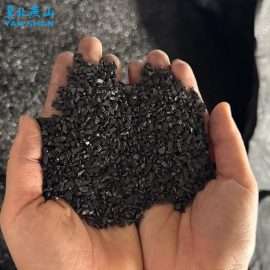
You’ll find coconut shell granular activated carbon (GAC) in municipal treatment plants, bottled water facilities, home filtration systems, and industrial wastewater operations. The water treatment segment is expected to dominate the activated carbon market with a share of 40.23% in 2026. The low ash content of coconut carbon means you don’t get leaching problems, and the hardness above 90% keeps your filter beds intact under pressure and flow. That translates to longer filter life and lower replacement costs. If you’re running any kind of water treatment setup, our coconut shell activated carbon range is built for exactly this.
2. Gold Recovery in Mining
Gold extraction is one of the biggest global uses for coconut activated carbon. Mining operations rely on it in Carbon-in-Pulp (CIP), Carbon-in-Leach (CIL), and Carbon-in-Column (CIC) processes to pull dissolved gold from cyanide leach solutions. The carbon adsorbs gold ions from the slurry, and then the gold gets stripped off through elution.

Because of its high abrasion resistance and exceptional chemical and physical characteristics, only coconut shell activated carbon can support applications such as recovery of gold and other precious metals.Inside a gold recovery circuit, the carbon gets pumped, screened, and tumbled nonstop. If the particles break down, you lose gold in the fines—and that’s money going straight down the drain. Coconut shell carbon’s mechanical strength prevents that. At Yanshan, we’ve been supplying gold mines for decades, and our YS-28 model is designed with the high iodine values and activity levels you need for better gold loading rates.
3. Air and Gas Purification
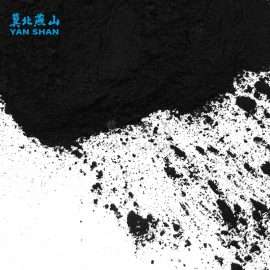
Air quality is a growing priority in 2026 for factories, offices, homes, and vehicles. Coconut shell activated carbon is a key component in air filtration systems, and its microporous structure effectively captures and neutralizes volatile organic compounds (VOCs). It also handles formaldehyde, benzene, hydrogen sulfide, odors, and other harmful gases that standard filters miss.
You’ll see it in HVAC systems, automotive cabin air filters, industrial scrubbers, gas masks, and portable air purifiers. The global activated carbon segment used in air treatment is expected to grow at a CAGR of 12% from 2026 to 2033—making it the fastest-growing segment in the entire activated carbon market. Coconut shell carbon’s low dust production and high adsorption capacity make it the preferred choice for any air filtration project. Whether you’re managing industrial emissions or purifying the air inside a building, this material delivers.
4. Food and Beverage Processing
The food and beverage industry uses coconut shell activated carbon for decolorization and purification across a wide range of products. Sugar refining, edible oil processing, wine filtration, juice clarification, MSG production, and beverage manufacturing all rely on activated carbon to pull out unwanted pigments, odors, and off-flavors. Activated carbon is used by the food industry for decolorization—removing unwanted pigments from sugar, syrups, and edible oils—and for purification, eliminating impurities in beverages like wine and fruit juices.
Coconut shell carbon wins here because of its naturally low ash content and high purity. Acid-washed grades are especially popular since they hit a balanced pH range of 7–8.5 and contain almost zero heavy metals. When the product goes into something people eat or drink, purity isn’t optional. That’s why food-grade coconut shell activated carbon has become the standard for manufacturers who need clean results without any chemical carryover.
5. Pharmaceutical and Medical Applications
In the medical field, activated carbon has a long track record. Activated carbon is used in medical applications due to its ability to adsorb toxins and poisons, with key uses including poison treatment in emergencies, hemodialysis for purifying blood, and pharmaceutical filtration for ensuring purity in drug manufacturing.
Coconut shell activated carbon stands out in this space because pharmaceutical-grade applications demand tight specs and low impurity levels. The consistent micropore structure and high purity of coconut-based carbon mean fewer side reactions during drug manufacturing and cleaner final products. As the global pharmaceutical industry continues growing, the demand for high-quality coconut carbon in this space will follow.
6. Oil Decolorization and Solvent Recovery
Industries that handle oils, solvents, and chemical processing need activated carbon that can adsorb color bodies and organic contaminants without falling apart under repeated use. Coconut shell carbon checks every box. It’s used to decolorize vegetable oils, mineral oils, and a variety of industrial solvents. Research has shown that coconut shell-derived activated carbon is effective for purifying waste cooking oil, with free fatty acids decreasing from 0.286% to 0.049% (82.9% reduction) and calorific value improving.
Solvent recovery is a growing application too. When manufacturing processes produce solvent-laden exhaust streams, coconut shell carbon captures those solvents for reuse rather than letting them escape. This saves raw material costs and keeps you in line with emissions regulations. The high hardness and mechanical strength of coconut carbon make it straightforward to regenerate and reuse multiple times, which brings your cost-per-cycle way down.
7. Energy Storage and Supercapacitors
This is the newest and most exciting use on the list. Supercapacitor energy storage devices are being explored for electric vehicles, renewable energy systems, consumer electronics, and industrial applications, and coconut shell activated carbon is emerging as a preferred material due to its unique pore structure, purity, and sustainability advantages.
Coconut shell carbon naturally forms a dense network of micropores effective for ion adsorption in supercapacitor electrodes, and because coconut shells contain fewer inorganic impurities, the resulting activated carbon has very low ash content—which is key in electrochemical applications where impurities increase resistance. Its durability also helps electrodes hold up through thousands of charge-discharge cycles. As the world pushes harder toward electric vehicles and renewable energy, this application is set to explode. Coconut shell activated carbon isn’t just a filtration material anymore—it’s becoming a building block for next-generation power systems.
Coconut Shell Activated Carbon Specs That Matter
Not all coconut shell carbon is the same. The specs below will help you compare products and pick the right grade for your project:
| Parameter | Typical Range | What It Tells You |
|---|---|---|
| Iodine Number | 900–1,200 mg/g | Adsorption capacity for small molecules |
| BET Surface Area | 500–1,500 m²/g | Total internal pore area available |
| Ash Content | < 5% | Purity level (lower is better) |
| Moisture Content | 5–10% | Shelf life and performance |
| Hardness | > 90% | Resistance to breakage during use |
| Mesh Size | 6×12 to 12×40 | Particle size matched to your system |
Higher iodine numbers generally mean better performance in water and air purification. For gold recovery, you want high hardness paired with high activity. Food and beverage operations should look for acid-washed grades with low ash and a neutral pH. Each gram of quality coconut shell activated carbon can have up to 1,000 square meters of surface area[9]—to put that in perspective, just 3 grams could cover an entire football field. When you’re choosing a supplier, ask for lab test reports and make sure the numbers match what’s on the spec sheet.

At Yanshan, every batch runs through our in-house laboratory against GB/T and ISO standards. We test for iodine number, surface area, ash content, moisture, hardness, and particle size distribution before anything gets packaged. That’s how we keep our quality consistent across shipments.
Why Choose Yanshan for Coconut Shell Carbon
We’ve been manufacturing activated carbon for over 35 years. We operate six production lines across 26,000 square meters of factory space, and we hold ISO9001:2015 certification. Our location in China’s “Carbon Capital” gives us direct access to premium Southeast Asian coconut shells, which means stable supply and competitive pricing year-round. We serve Fortune 500 companies including Samsung Electronics and Tesla Shanghai, and we offer customized solutions for water treatment, gold extraction, and every other application on this list.
Whether you need 25kg bags for testing or 500kg jumbo bags for full-scale operations, we ship fast from our large-scale warehouse. We also offer free samples so you can run your own tests before committing to a bulk order. Your money is 100% secure, and our after-sales team is available 24 hours a day. Visit Yanshan Carbon to get your quote today and find out why thousands of businesses trust us with their activated carbon supply.
FAQs
Is coconut shell activated carbon better than coal-based?
For most filtration and adsorption jobs, yes. Coconut shell carbon has a significantly higher porosity than other forms of activated carbon—up to 50% more micropores than bituminous coal—which is why it’s considered one of the most optimal materials for water filtration and VOC removal.It’s also harder, produces less dust, lasts longer, and comes from a renewable source. Coal-based carbon still works well for some large-volume industrial uses where cost is the main factor, but coconut shell outperforms it in water purification, food processing, gold recovery, and air treatment.
How long does coconut shell activated carbon last?
It depends on what you’re using it for. In home water filters, plan on replacing it every 6–12 months. In industrial water treatment or air purification, it can last 1–3 years before it needs regeneration. The high hardness of coconut shell carbon (above 90%) means it holds its shape longer than softer carbons, which extends its useful life. When it does get exhausted, thermal reactivation can restore most of the adsorption capacity so you can reuse it.
What iodine number should I look for?
For water purification, target an iodine number between 900 and 1,200 mg/g. Higher numbers mean more adsorption capacity for small molecules. For gold recovery, iodine number is just one factor—you also need high hardness, specific mesh sizes, and high gold loading activity. For food-grade applications, focus on low ash and balanced pH along with a solid iodine value. We can help you match the right specs to your project.
Can coconut shell activated carbon be regenerated?
Yes. Spent coconut shell activated carbon can be thermally reactivated by heating it to very high temperatures. This burns off the adsorbed contaminants and reopens the pore structure, restoring much of the original performance. You can typically regenerate coconut carbon multiple times before it needs full replacement, which cuts long-term costs. The high mechanical strength of coconut shell carbon makes it especially well-suited for repeated regeneration cycles.
Is coconut shell activated carbon safe for drinking water?
Absolutely. Coconut shell activated carbon is one of the safest filtration materials you can use for drinking water. Its naturally low ash content, food-grade purity, and non-leaching behavior make it the go-to choice for home filters, point-of-entry systems, and municipal treatment plants worldwide. Look for products that meet NSF/ANSI standards or equivalent certifications to make sure you’re getting a safe, tested product.