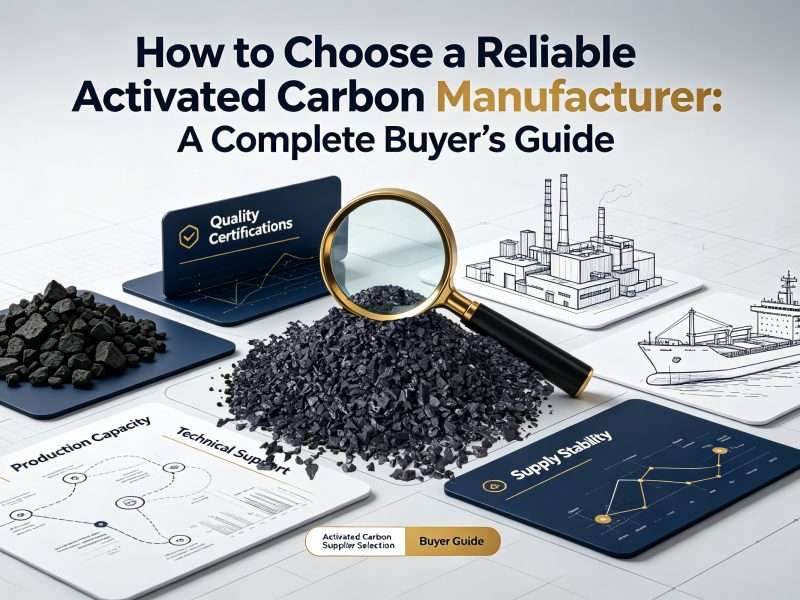
Choosing the right activated carbon supplier is an important decision for industries that depend on stable adsorption performance. Whether the application is gold recovery, water treatment, air purification, food processing, or chemical purification, the quality of activated carbon directly affects production efficiency and operating costs.
However, not all activated carbon manufacturers provide the same level of quality, consistency, and service. A reliable supplier should not only offer competitive prices but also ensure stable raw materials, strict quality control, and professional export support.
This guide explains the key factors to consider when selecting a reliable activated carbon manufacturer.
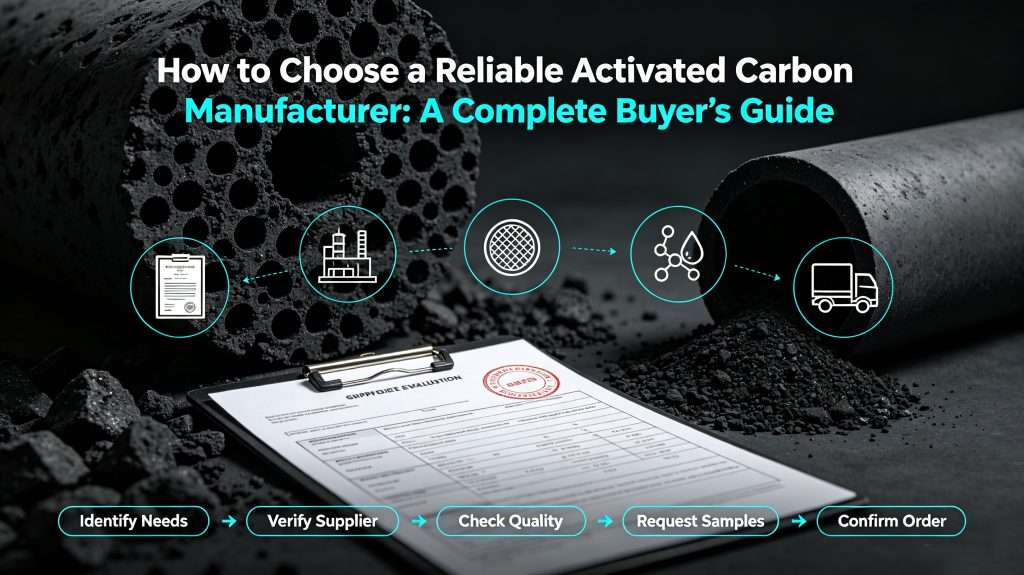
1. Check the Manufacturer’s Production Capability
A professional activated carbon supplier should have its own production facilities and sufficient manufacturing capacity.
A stable factory can provide:
- Consistent product quality
- Reliable supply capacity
- Shorter production lead times
- Better control over raw materials and processes
For large industrial users, supply stability is especially important. A supplier with limited production capacity may experience delays during periods of high demand, affecting your business operations.
Therefore, before cooperation, buyers should understand:
- Factory production capacity
- Manufacturing equipment
- Production process
- Quality management system
2. Evaluate the Raw Material Quality
The performance of activated carbon starts with the raw materials.
For coconut shell activated carbon, high-quality coconut shells are essential because they determine the pore structure, hardness, and adsorption performance of the final product.
Premium coconut shell activated carbon usually provides:
- Developed microporous structure
- High adsorption capacity
- Excellent hardness
- Low abrasion loss
A reliable manufacturer should have stable access to high-quality coconut shell raw materials and strict control over every production step.
3. Understand Activated Carbon Quality Parameters
Different applications require different activated carbon properties. Buyers should select products based on actual usage requirements rather than focusing only on price.
Important quality indicators include:
Iodine Value
Iodine value reflects the adsorption capacity of activated carbon.
A higher iodine value usually indicates a more developed pore structure, which is important for applications requiring strong adsorption performance.
Hardness and Mechanical Strength
Activated carbon used in industrial processes must withstand handling, transportation, and continuous operation.
High-strength carbon helps:
- Reduce carbon loss
- Extend service life
- Improve operating efficiency
This is especially important for gold recovery applications such as CIP and CIL processes.
Particle Size
Particle size affects:
- Adsorption speed
- Filtration performance
- Carbon recovery efficiency
Professional manufacturers can provide customized particle size according to customer requirements.
4. Confirm Application Experience
A reliable activated carbon manufacturer should understand different industries and their specific requirements.
For example:
Gold Recovery Industry
Activated carbon for gold extraction requires:
- High adsorption capacity
- Strong abrasion resistance
- Stable performance in CIP/CIL systems
Water Treatment Industry
Water purification applications require:
- Effective removal of organic compounds
- Stable adsorption performance
- Consistent quality
Food and Pharmaceutical Industry
These industries require:
- Strict quality control
- Reliable production standards
- Proper documentation
A supplier with application experience can recommend the most suitable activated carbon product instead of simply selling standard materials.
5. Check Quality Control and Testing Standards
Quality consistency is one of the biggest differences between professional manufacturers and trading companies.
A reliable activated carbon factory should conduct regular testing, including:
- Iodine value testing
- Moisture analysis
- Ash content testing
- Hardness testing
- Particle size inspection
- Adsorption performance evaluation
Before shipment, suppliers should provide quality documents such as:
- COA (Certificate of Analysis)
- Product specifications
- Inspection reports
These documents help customers confirm product quality and complete import procedures smoothly.
6. Consider Export Experience and Logistics Support
For international buyers, product quality is only one part of successful cooperation. Reliable delivery is equally important.
An experienced exporter should understand:
- International shipping requirements
- Export documentation
- Customs clearance procedures
- Different market requirements
Professional suppliers can help customers prepare:
- Certificate of Origin
- COA
- Shipping documents
- Other required certificates
Good logistics support reduces delivery risks and helps customers receive products on schedule.
7. Avoid Choosing Suppliers Based Only on Price
Price is an important factor, but it should not be the only consideration.
Low-priced activated carbon may result in:
- Lower adsorption capacity
- Higher carbon consumption
- Shorter service life
- Increased production costs
A slightly higher-quality activated carbon product can often create greater value by improving efficiency and reducing replacement frequency.
The best supplier is not always the cheapest supplier. It is the one that provides the best balance of:
- Quality
- Stability
- Service
- Long-term value
Why Choose Our Activated Carbon Factory?
As a professional coconut shell activated carbon manufacturer, we focus on providing high-quality activated carbon solutions for global customers.
Our advantages include:
- Stable coconut shell raw material supply
- Advanced production technology
- Strict quality control
- Customized product specifications
- Professional export service
Our coconut shell activated carbon is widely used in industrial applications, including gold recovery processes such as CIP and CIL.
We are committed to helping customers improve adsorption performance, reduce operating costs, and achieve more stable production results.
Conclusion
Choosing a reliable activated carbon manufacturer requires more than comparing prices. Product quality, production capacity, raw material sources, technical experience, and export capability all influence long-term cooperation.
By working with a professional and experienced supplier, companies can ensure stable activated carbon performance and create greater value for their operations.