

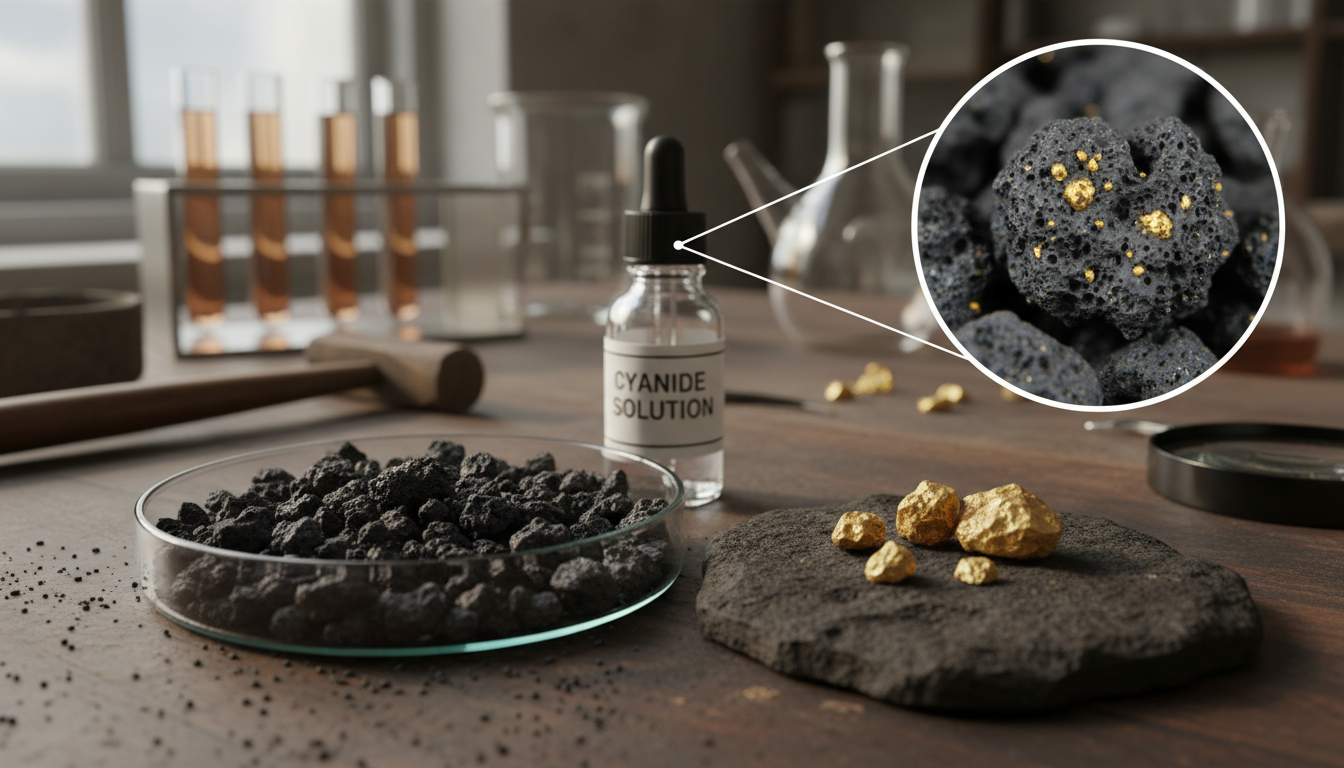
Gold mining operations depend on one powerful material to capture precious metals from ore solutions: activated carbon. This porous adsorbent has transformed how we extract gold, making recovery rates of 97-98% possible in modern mining facilities. Whether you’re running a Carbon-in-Pulp operation or evaluating heap leach solutions, the right activated carbon can make the difference between profit and loss.
The gold recovery process starts when crushed ore reacts with cyanide solution, forming a gold-cyanide complex. This complex dissolves into the solution, but it can’t be recovered directly. That’s where activated carbon steps in. With a surface area that can reach over an acre per quarter teaspoon, this material traps gold molecules and holds them until they can be extracted through elution. At Yanshan Carbon, we’ve seen firsthand how the right carbon specification changes recovery outcomes for mining operations worldwide.
How Activated Carbon Works in Gold Recovery
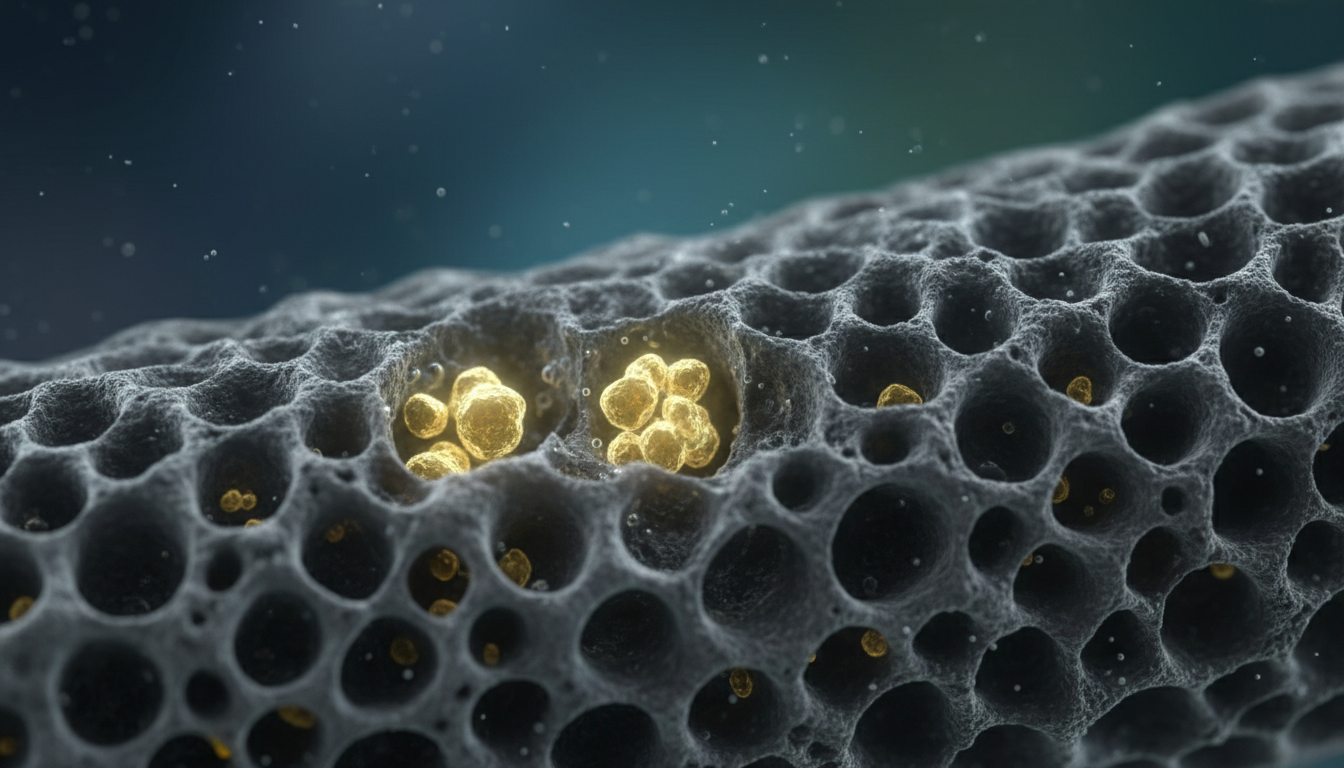
Gold doesn’t exist in a form that activated carbon can capture on its own. The ore must first undergo cyanidation, where it reacts with sodium cyanide to create dicyanoaurate, the gold-cyanide coordination complex. This complex carries a charge that attracts it to the massive internal surface of activated carbon particles.
The adsorption happens through physical forces between the gold complex and the carbon’s graphitic structure. The carbon’s microporous network creates countless binding sites where gold molecules attach and concentrate. Think of it like a molecular net with millions of capture points. The more developed the pore structure, the more gold the carbon can hold. Lab tests show some carbons achieve adsorption capacities exceeding 600 mg of gold per gram of carbon.
Once loaded with gold, the carbon undergoes elution or stripping. Hot alkaline solutions at temperatures around 150-165°C release the gold from the carbon surface without damaging the carbon itself. The concentrated gold solution then proceeds to electrowinning, where pure gold deposits onto electrodes.
Types of Gold Recovery Processes
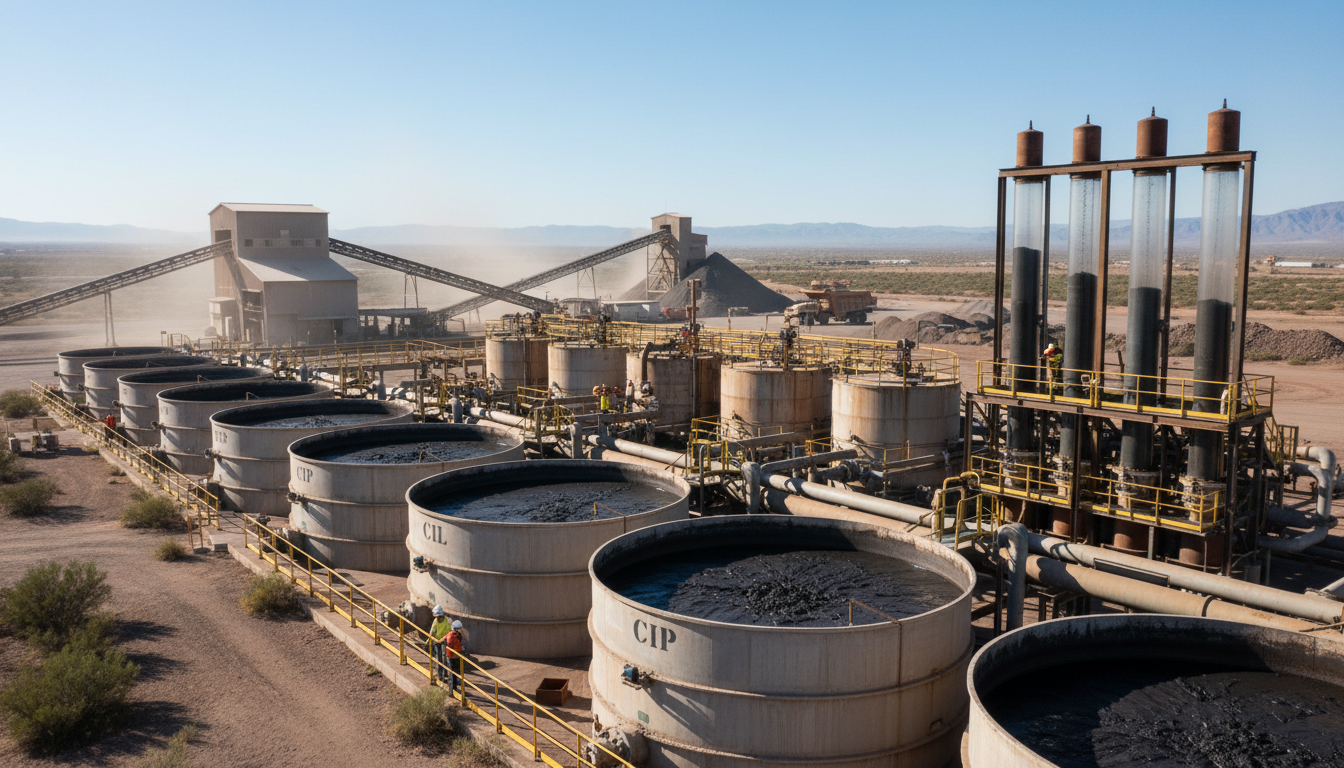
Three main methods use activated carbon to recover gold, each suited to different ore characteristics and operational needs.
Carbon-in-Pulp (CIP) processes leach gold first, then add activated carbon to adsorb the dissolved gold from the slurry. This method works well for low-grade ores and delivers high recovery rates. The carbon contacts the pulp in large agitated tanks, moving countercurrent to the slurry flow.
Carbon-in-Leach (CIL) combines leaching and adsorption in a single step. Gold dissolves and gets captured by carbon nearly simultaneously. We recommend this approach when dealing with ores that contain native carbon or high organic content. The activated carbon you add preferentially adsorbs gold over the organic material already present in the ore, preventing gold loss. Our coconut shell activated carbon performs exceptionally well in these demanding conditions.
Carbon-in-Column (CIC) handles clarified solutions from heap leaching operations. The gold-bearing solution flows upward through columns packed with activated carbon, creating a fluidized bed. This method excels at treating solutions with high solids content and lower gold concentrations.
Why Coconut Shell Activated Carbon Stands Out
Over 95% of gold recovery operations use steam-activated coconut shell carbon. The reasons go beyond availability—this material delivers measurable performance advantages.
Coconut shell carbon offers superior mechanical strength compared to alternatives like coal or wood-based carbons. In the turbulent environment of CIP and CIL tanks, where carbon particles face constant agitation and pumping, hardness values above 98% prevent the formation of fines. Every fine particle that breaks off represents both carbon loss and gold loss, since those tiny fragments can’t be screened out and end up in tailings.
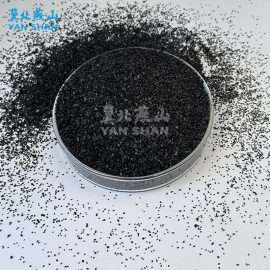
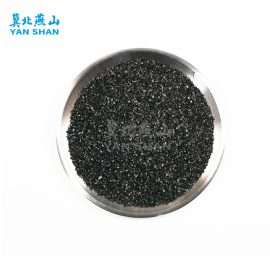
The microporous structure of coconut shell carbon matches perfectly with the size of gold-cyanide complexes. The pores develop during activation at controlled temperatures, creating pathways that allow rapid adsorption while maintaining high capacity. Surface areas typically range from 1000-1400 m²/g, with iodine values of 900-1200 mg/g indicating strong adsorptive potential. Our coconut shell granular activated carbon meets these specifications consistently.
Desorption efficiency matters just as much as adsorption. Gold releases more readily from coconut shell carbon during elution, which means shorter stripping cycles and better gold recovery in the electrowinning stage. The carbon’s structure allows effective cleaning without excessive degradation.
Key Properties to Look For
Not all activated carbon performs equally in gold recovery applications. Several characteristics determine how well carbon will perform in your specific operation.
Particle size creates a balance between adsorption speed and screening efficiency. Smaller particles adsorb gold faster due to increased surface area exposure, but they’re harder to separate from slurry and more prone to loss through screens. Most operations use 6×12 mesh granular carbon. The particle size distribution should remain uniform to prevent screen blinding.
Hardness and attrition resistance protect your investment. Carbon with strength values below 97% generates excessive fines during handling, transfer through pumps, and regeneration. These losses add up quickly. Quality carbon maintains its particle integrity through multiple adsorption-desorption cycles.
Platelet content should stay below 4%. Platelets are thin, flat carbon particles that behave differently than spherical granules. They can clog screens and create flow problems in CIP circuits. Wind separation during production removes most platelets before the carbon reaches your facility.
Ash content below 5% indicates cleaner raw material and better activation. High ash content occupies space that could otherwise hold gold and introduces impurities into your process stream.
The Regeneration Advantage
One of activated carbon’s biggest economic benefits in gold mining is reusability. Instead of buying fresh carbon for every cycle, saturated carbon undergoes regeneration and returns to service.
After elution removes the gold, an acid wash partially reactivates the carbon by removing inorganic deposits. But organic compounds that accumulated on the carbon surface during adsorption resist acid treatment. These require thermal regeneration in rotary kilns at high temperatures. The heat burns off organic contaminants while preserving the carbon’s pore structure.
Quality coconut shell carbon handles over 100 regeneration cycles with minimal deterioration in adsorption capacity. Each regeneration costs far less than replacement carbon, making this reusability a major operational advantage. The carbon slowly loses 2-5% of its mass per cycle, requiring periodic addition of fresh carbon to maintain bed volumes.
Proper regeneration temperature control prevents decomposition of the gold-cyanide complex on the carbon surface, which begins around 170°C. Gold deposited directly on carbon during regeneration becomes extremely difficult to recover.
Selecting the Right Supplier
Carbon quality varies significantly between suppliers, and those variations directly impact your gold recovery rates and operating costs. We’ve worked with mining operations that switched suppliers and immediately saw their recovery rates drop by several percentage points.
Look for suppliers who understand gold recovery applications specifically. General-purpose activated carbon won’t perform the same way as carbon engineered for precious metals extraction. Ask about iodine values, hardness testing methods, and quality control procedures. Reputable suppliers provide detailed specifications and can supply samples for testing in your actual process conditions.
Consistent quality matters more than rock-bottom pricing. Carbon that arrives with high fines content or inconsistent particle sizing creates operational headaches and reduces gold recovery. Factor in the total cost including shipping, handling, and performance, not just the per-ton price. At Yanshan Carbon, we maintain strict quality standards across all our product lines, from coal-based activated carbon to specialized gold recovery grades.
Technical support makes a difference when troubleshooting adsorption issues or optimizing carbon loading rates. A supplier who can analyze your process parameters and recommend adjustments adds value beyond the product itself.
Conclusion
Activated carbon remains the gold standard (literally) for precious metals recovery because it delivers reliable performance at reasonable cost. The combination of high adsorption capacity, selective gold capture, regeneration capability, and proven track record across thousands of mining operations worldwide makes it the logical choice.
Coconut shell-based carbons dominate the market for good reasons: superior hardness, ideal pore structure, and excellent desorption characteristics. When you select carbon with the right particle size, strength, and purity specifications for your specific process—whether CIP, CIL, or CIC—you’re setting up for maximum gold recovery and minimum operational disruption.
The investment in quality activated carbon pays back through higher recovery rates, longer carbon life, and fewer process problems. Every percentage point of additional gold recovery multiplies across tons of ore processed, adding up to real profit improvement.
FAQs
What mesh size activated carbon is best for gold recovery?
Most gold mining operations use 6×12 mesh coconut shell granular activated carbon. These sizes balance fast gold adsorption with easy screening from slurry. Smaller particles adsorb faster but create more losses through screens, while larger particles screen easily but adsorb more slowly. Your specific process design and ore characteristics determine the optimal size.
How many times can activated carbon be regenerated in gold recovery?
High-quality coconut shell activated carbon can undergo 100+ regeneration cycles with proper handling. Each cycle causes minor deterioration in adsorption capacity and physical loss of 2-5% of the carbon mass. Thermal regeneration in rotary kilns at controlled temperatures removes organic fouling while preserving pore structure. Regular addition of fresh carbon maintains system performance.
Why is coconut shell carbon preferred over coal-based carbon for gold recovery?
Coconut shell activated carbon offers higher mechanical strength (typically 98%+ hardness) compared to coal-based alternatives, reducing fines generation during the rigorous handling in CIP and CIL circuits. The microporous structure matches gold-cyanide complex molecules better, providing faster adsorption kinetics and higher loading capacity. Gold also desorbs more easily from coconut shell carbon during elution, improving overall recovery efficiency.
What affects activated carbon’s ability to adsorb gold?
Several factors influence gold adsorption: the carbon’s surface area and pore structure, particle size distribution, presence of competing ions (especially copper, silver, and other metals that form cyanide complexes), pH of the solution, gold concentration, and contact time. Impurity ions can occupy active sites on the carbon surface, reducing gold adsorption capacity. Solution pH between 10-11 works best for most operations.
How much gold can activated carbon hold?
Adsorption capacity varies based on carbon quality and process conditions, but high-performance coconut shell activated carbon typically achieves gold loadings of 3,000-8,000 grams of gold per ton of carbon in actual plant operations. Laboratory tests under ideal conditions show maximum capacities exceeding 600 mg gold per gram of carbon. Real-world performance depends on carbon specifications, solution chemistry, contact time, and operating parameters.