
Carbon-in-Pulp (CIP) Process: Efficient Gold Adsorption from Leached Slurry
The Carbon-in-Pulp (CIP) process is a widely used method for gold recovery following cyanide leaching. The process begins with ore that is finely ground and then subjected to gold dissolution in a series of agitated cyanide leach tanks. Once leaching is complete, the resulting slurry, containing the dissolved gold, is transferred to a dedicated CIP adsorption circuit.
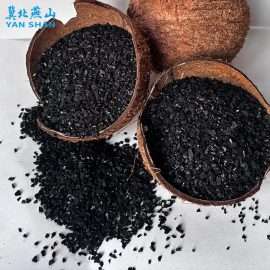
This circuit typically consists of a cascade of five or six agitated tanks. Granular activated carbon is introduced into this series of tanks, where it moves counter-currently to the flow of the leached slurry. This staged, counter-current contact is a key feature of the CIP process, ensuring that the freshest carbon meets the solution with the lowest gold concentration, thereby maximizing the efficiency of gold adsorption. As the carbon adsorbs the gold from the slurry solution, it becomes progressively loaded with gold. The gold-laden carbon is then mechanically separated from the barren slurry through coarse screening, ready for the gold elution (stripping) stage. This highly efficient system achieves high gold recovery rates by optimizing the concentration gradient between the carbon and the solution.

Related Products