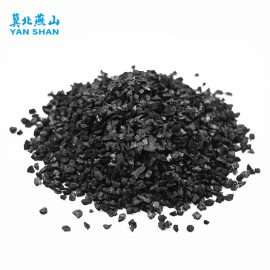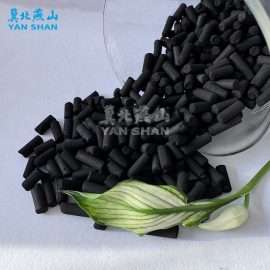

When activated carbon is used as a carrier, it does not directly participate in catalytic reactions. Its core function is to provide a stable loading substrate for active components (such as metals and metal oxides) and optimize catalytic reaction conditions.
core functionality
Disperse active components: The porous structure of activated carbon (micropores, mesopores) can uniformly disperse nanoscale active metals (such as Pt, Pd, Ni), avoiding metal particle aggregation and significantly increasing the specific surface area and reaction contact sites of the active components.
Stable catalytic system: Fixing active components through physical adsorption or chemical bonding to prevent their loss during the reaction process and extend the service life of the catalyst.
Adjusting the reaction environment: The abundant functional groups on its surface (such as hydroxyl and carboxyl groups) can regulate the interaction between the carrier and the active component, indirectly optimizing the selectivity of the catalytic reaction.
Typical application scenarios
Automotive exhaust treatment: Activated carbon loaded with metals such as Pd and Rh serves as a three-way catalyst carrier to assist in catalyzing the conversion of CO and nitrogen oxides into harmless gases.
Hydrogenation reaction: In the petrochemical industry, activated carbon is loaded with Ni or Cu as a carrier for olefin and aromatic hydrocarbon hydrogenation reactions, improving reaction efficiency.
Related Products