
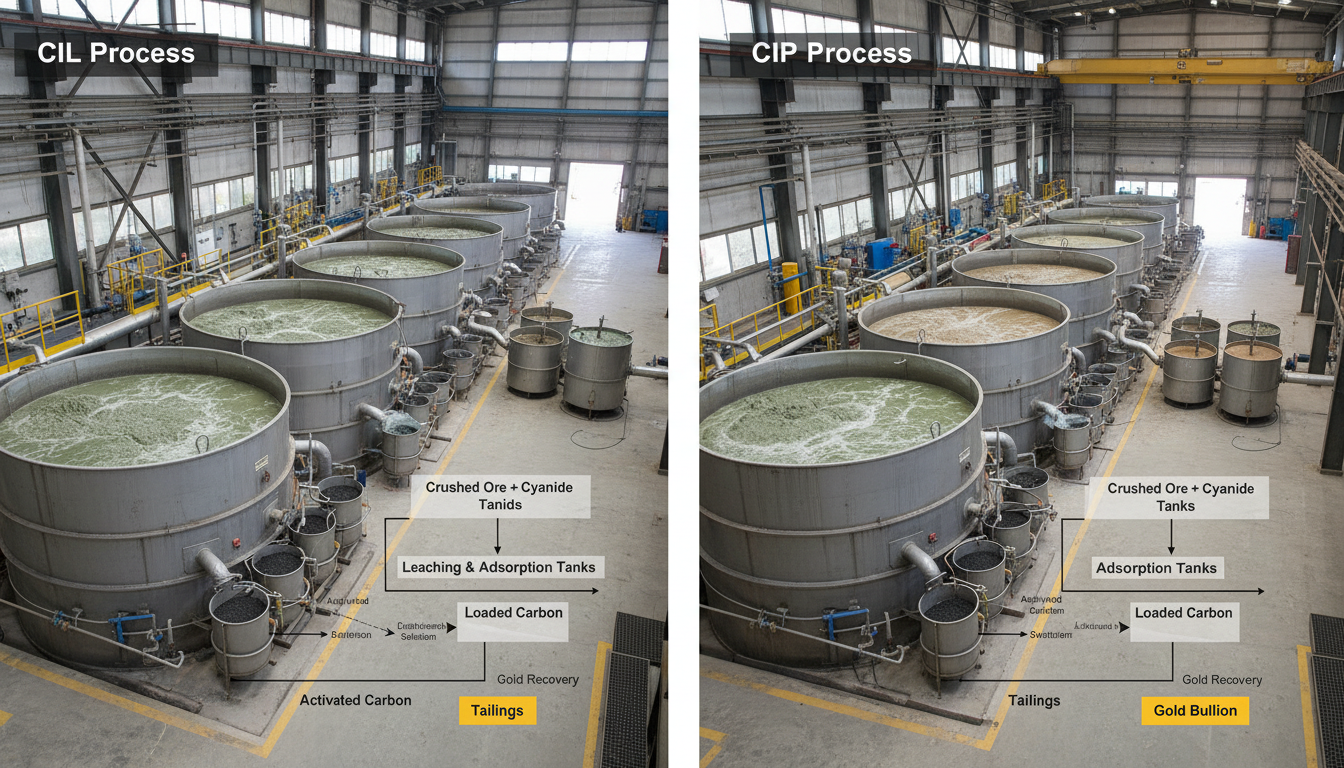
Gold extraction has come a long way, and if you’re working with cyanide-based recovery systems, you’ve probably come across two methods that dominate the mining world: Carbon-in-Leach (CIL) and Carbon-in-Pulp (CIP). Both use activated carbon to pull gold from ore, but they work differently—and picking the right one can make or break your operation’s efficiency and bottom line.
At Yanshan Carbon, we work with mining operations across the African region to supply quality activated carbon products designed for gold recovery. We know that choosing between CIL and CIP isn’t just about the process—it’s about matching the right carbon grade and particle size to your ore characteristics, budget, and recovery goals. Let’s break down what sets these two methods apart and how to pick the carbon that’ll give you the best results.
What Is CIP?
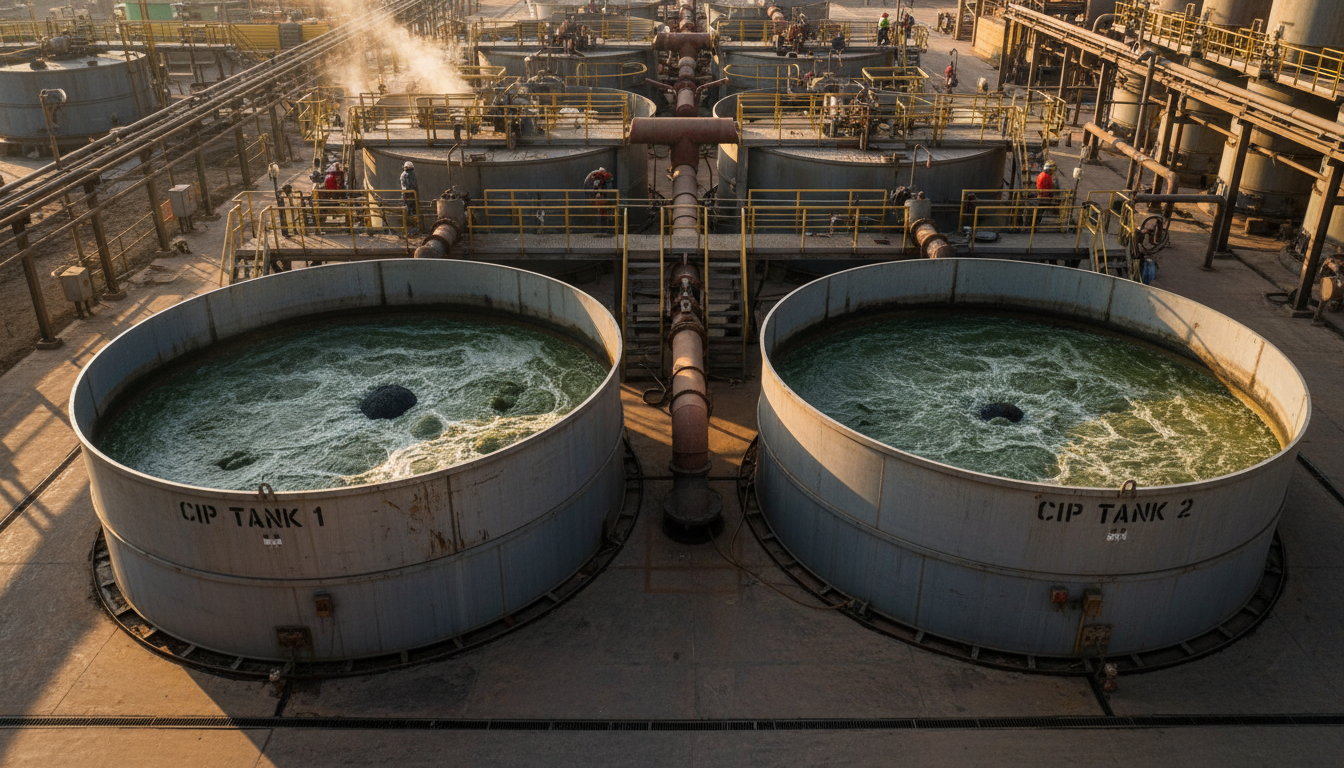
CIP, or Carbon-in-Pulp, is a gold recovery process that involves two main stages: leaching and adsorption. The process begins with the leaching of gold from ore using a cyanide solution. After the gold is dissolved, the solution is treated with activated carbon to adsorb the gold-cyanide complex. Think of it as a two-step dance—first you dissolve, then you capture.
CIP involves two distinct stages—leaching followed by adsorption. The gold is first dissolved in the cyanide solution, and then the solution is treated with activated carbon. The leaching happens in dedicated tanks where crushed ore mixes with cyanide solution for about 24 hours. Once leaching wraps up, the gold-rich solution moves to separate adsorption tanks filled with activated carbon. The carbon grabs the gold as it flows through, moving in the opposite direction to the slurry (that’s the countercurrent part everyone talks about).
In short, the carbon in pulp (CIP) process means cyanidation leaching first and then adding the activated carbon in the slurry to adsorb gold. In the CIP process, leaching and adsorption are independent operations. This separation gives you more control over each stage, but it also means more tanks, more equipment, and potentially longer processing times.
What Is CIL?
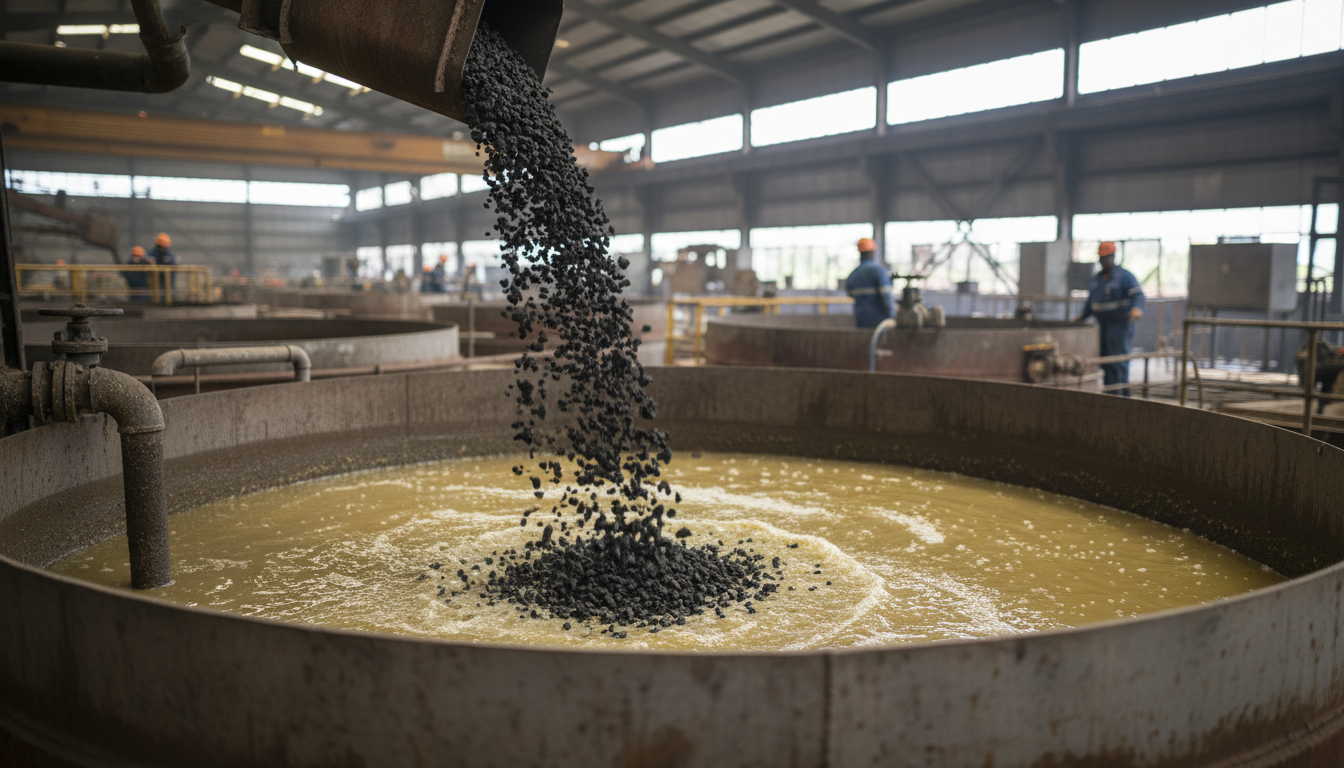
CIL, or Carbon-in-Leach, combines the leaching and adsorption processes into a single step. In CIL, activated carbon is added directly to the leaching tanks, allowing for simultaneous gold dissolution and adsorption. Instead of waiting for leaching to finish, you throw carbon into the mix right from the start.
The carbon in leach (CIL) process means that the activated carbon is added to the leaching tank, the leaching and adsorption are carried out at the same time. In the CIL process, the leaching and adsorption operations are carried out simultaneously. As soon as gold dissolves from the ore, activated carbon is already there to capture it. This simultaneous action can speed up your overall process and cut down on the number of tanks you need.
The simultaneous leach and absorption phases of the CIL process were developed for processing gold ores that contain pre-robbing materials such as natural absorptive carbon. These reduce the gold yield by attracting gold meant for the activated carbon. Simultaneous leaching and absorption help minimize the problem. So if your ore has organic materials that like to steal gold before your carbon gets a chance, CIL can be a game-changer.
Key Differences Between CIL and CIP
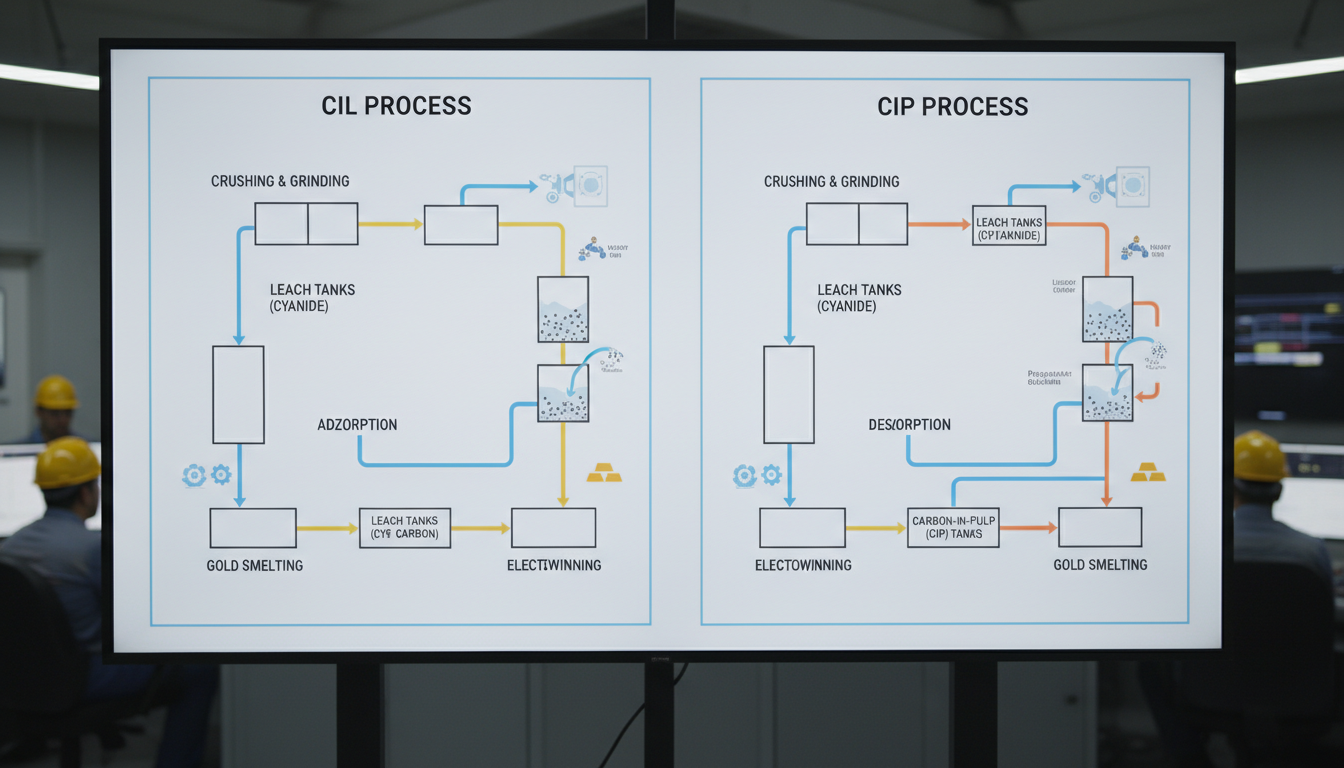
The timing makes all the difference. Process sequence: In the carbon-in-pulp process adsorption occurs after the leaching cascade section of the plant, and in the carbon-in-leach process leaching and adsorption occur simultaneously. That’s the headline difference, but it creates a ripple effect across your entire operation.
Recovery rates: CIL typically offers higher recovery rates since the carbon is in contact with the gold during leaching, enhancing the adsorption process. When gold dissolves and immediately meets carbon, you lose less to solution. CIL can hit recovery rates above 90%, sometimes pushing toward 99% with the right setup.
Equipment and cost: The CIL process has a low initial investment cost and does not require additional carbon slurry separation equipment, so it is widely used in small gold ore concentrators. The CIP process is more economical when applied to large-scale gold ore concentrators, but its initial investment cost is high. Fewer tanks for CIL means lower upfront spending, but CIP’s flexibility can pay off at scale.
Carbon management: The CIP process is longer than the CIL process, but there are a large amount of carbon and a low concentration of carbon in the CIL process, so the slurry volume for carbon transshipment in the CIL process is several times that of CIP (generally four times). CIL needs more carbon moving through the system, which means more handling but also more continuous contact time.
Which Process Should You Choose?
Here’s where it gets practical. Your ore tells you what to do. CIL is a continuous operation mode with a high gold recovery rate, usually above 90%, which is particularly suitable for processing low-grade gold ore. If you’re dealing with lower grades or ores that fluctuate in quality, CIL’s continuous nature handles that better.
When processing high-grade gold ore, the CIP process has the advantages of simple operation and relatively lower equipment complexity, and can quickly extract gold. The CIP process will show higher efficiency when processing uniform ore. Consistent, richer ore? CIP might be your friend.
Budget matters too. Small to mid-size operations often lean toward CIL for the lower startup costs. Large mines with steady ore feeds and capital to invest might get better long-term value from CIP’s separate control points. In actual production, the choice of CIP or CIL process needs to consider aspects such as ore characteristics, production scale and environmental impact.
Carbon Selection Matters
No matter which process you pick, the activated carbon you use makes a huge difference. Both CIL and CIP rely on carbon’s ability to grab gold from solution, so quality can’t be an afterthought.
Particle size: Most gold recovery operations use carbon in the 6-12 mesh or 5-10 mesh range. Smaller particles adsorb faster, but they’re harder to screen out and you’ll lose more carbon (and gold) in the process. Larger particles are easier to handle but slower to load. It’s a balance.
Hardness: Your carbon needs to survive constant mixing, pumping, and regeneration. Soft carbon breaks down, creating fines that escape through screens and carry gold with them. Coconut shell activated carbon typically offers superior hardness compared to coal-based options, making it popular for CIP and CIL circuits.
Adsorption capacity: This is your carbon’s loading limit—how much gold it can hold before it’s maxed out. Higher capacity means fewer carbon transfers and less frequent regeneration. Coal-based activated carbon and coconut shell varieties each have different capacity profiles that fit different applications.
Activity and regeneration: Carbon loses activity over time from organic fouling and mechanical wear. Good carbon maintains activity through multiple regeneration cycles, keeping your costs down. We’ve seen operations double their carbon lifespan just by switching to higher-quality material.
Conclusion
Choosing between CIL and CIP comes down to your ore type, operation size, and budget. CIL combines leaching and adsorption for faster processing and lower upfront costs, making it great for low-grade or variable ores. CIP separates the stages for more control and works well with high-grade, consistent ore at larger scales. But here’s the thing: neither process works at its best without the right activated carbon.
Particle size, hardness, adsorption capacity, and regeneration potential all affect your gold recovery rates and operating costs. At Yanshan Carbon, we supply a range of activated carbon products—from coconut shell granular to coal-based powdered options—engineered for gold extraction processes. Getting the carbon right means getting more gold out and keeping your operation running smoothly.
FAQs
What’s the main difference between CIL and CIP in gold extraction?
The main difference is timing. CIP completes leaching first in dedicated tanks, then adds activated carbon in separate adsorption tanks. CIL adds carbon directly into the leaching tanks, so both processes happen at the same time. This makes CIL faster and more compact, while CIP offers more control over each stage.
Which activated carbon type works best for gold recovery?
Coconut shell activated carbon is the most common choice because of its hardness, tight pore structure, and high adsorption capacity. It resists breakdown better than coal-based carbon during pumping and regeneration, which means less carbon loss and better gold recovery over time. The specific grade depends on your ore and process.
Can I switch from CIP to CIL without major equipment changes?
Switching isn’t simple. CIL requires carbon retention screens in the leach tanks and different carbon transfer systems since leaching and adsorption happen together. You’d need to retrofit leach tanks and adjust your carbon management setup. It’s possible but involves some capital investment and downtime.
How often does activated carbon need regeneration in gold recovery?
Most operations regenerate carbon after it’s been through the adsorption-desorption cycle multiple times and activity drops below acceptable levels. Depending on ore characteristics and carbon quality, this might be every few weeks to a couple of months. Regular monitoring of carbon activity and gold loading helps you time regeneration for maximum efficiency.
Does CIL always give higher gold recovery than CIP?
Not always. CIL often achieves higher recovery rates because carbon captures gold immediately as it dissolves, reducing losses to solution. But CIP can match or exceed CIL recovery with proper optimization and when processing certain ore types. The best recovery depends on matching the process to your specific ore characteristics and operating conditions.