

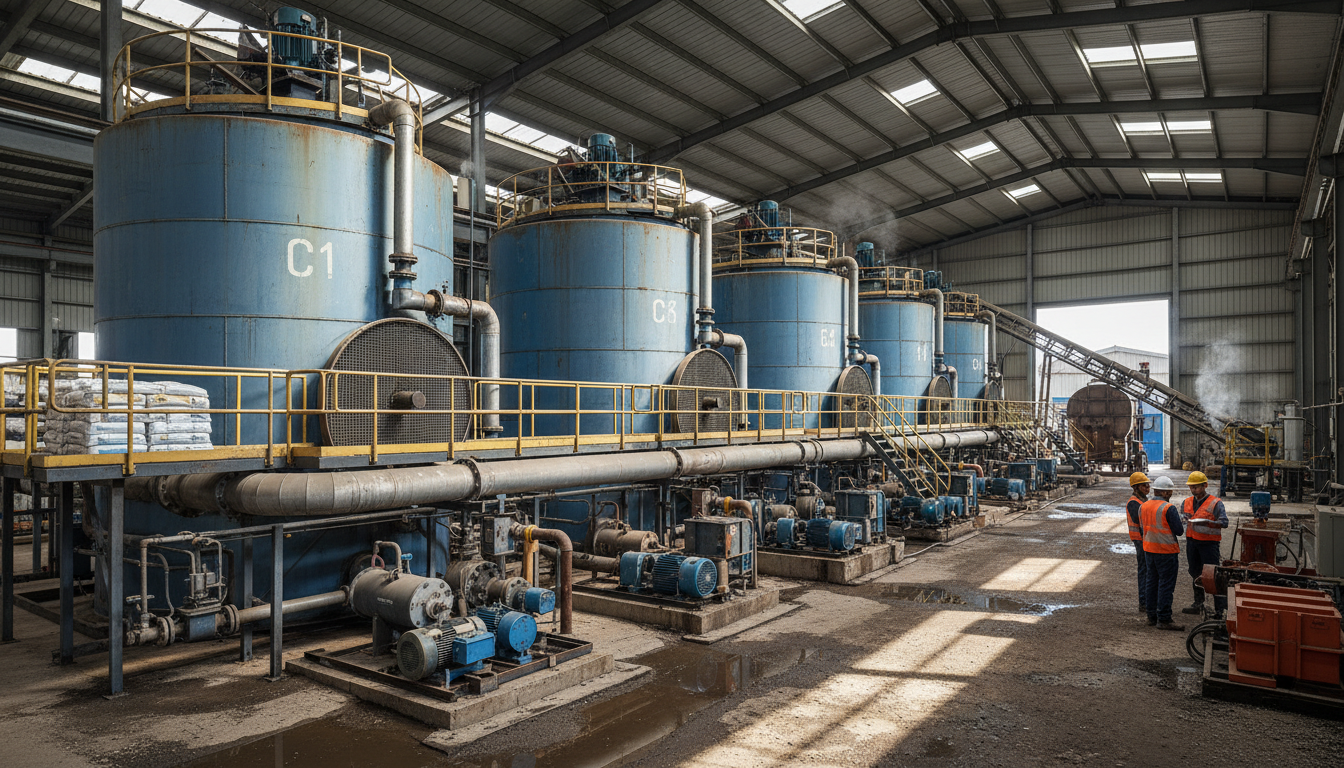
Gold recovery operations depend on activated carbon that meets specific performance standards. Whether you’re running CIP, CIL, or CIC circuits, the quality of your carbon directly affects how much gold you recover and how much money you spend doing it. We’ve spent years working with mining operations, and we know that selecting the right carbon can make the difference between hitting your targets and falling short.
Coconut-based activated carbons are typically chosen because of the superior hardness, tight pore structure, and high activity pores. But raw material type is just the starting point. Let’s break down the specs that matter.
Mesh Size and Particle Distribution
Commonly activated carbon sizes for gold recovery range from 6-12mesh (1.68 mm ~ 3.36 mm), 8-16mesh (1.19 mm ~ 2.38 mm), and 6-16mesh (1.19 mm ~ 3.36 mm). These aren’t random numbers. Smaller particles give you faster adsorption, but they’re harder to screen from your slurry. Go too large, and you sacrifice gold pickup rates.
The particle size you choose needs to work with your screening equipment. Carbon is sized (e.g., 4×6 mesh, 6×10 mesh, 6×12 mesh) to ensure optimal screening efficiency within the plant’s specific equipment. Look for carbon with minimal fines and platelets. Those dust-sized particles will load up with gold, then wash right through your screens.
Hardness and Attrition Resistance
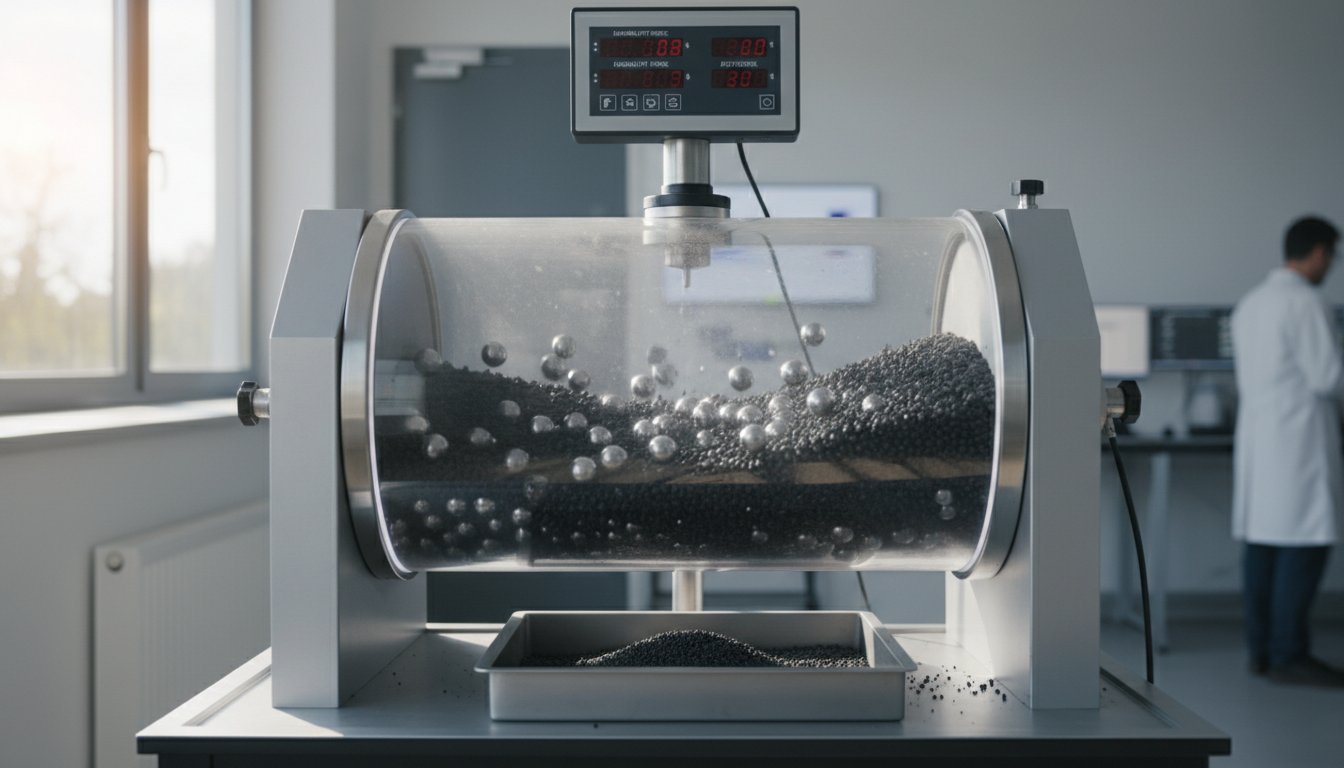
Here’s where cheap carbon costs you money. Activated carbon is subjected to intense friction and tumbling during the CIC, CIP/CIL processes. Soft carbon breaks down into fines, and those fines carry gold straight out of your circuit.
Hardness (typically ≥97% for gold recovery applications) is the baseline. We recommend looking at Ball-Pan Hardness or Jet Cup Attrition test results. Higher percentages (e.g., >98% on Ball-Pan Hardness) indicate a harder, more durable carbon. Our coconut shell activated carbon products consistently exceed these standards.
Adsorption Capacity and Kinetics
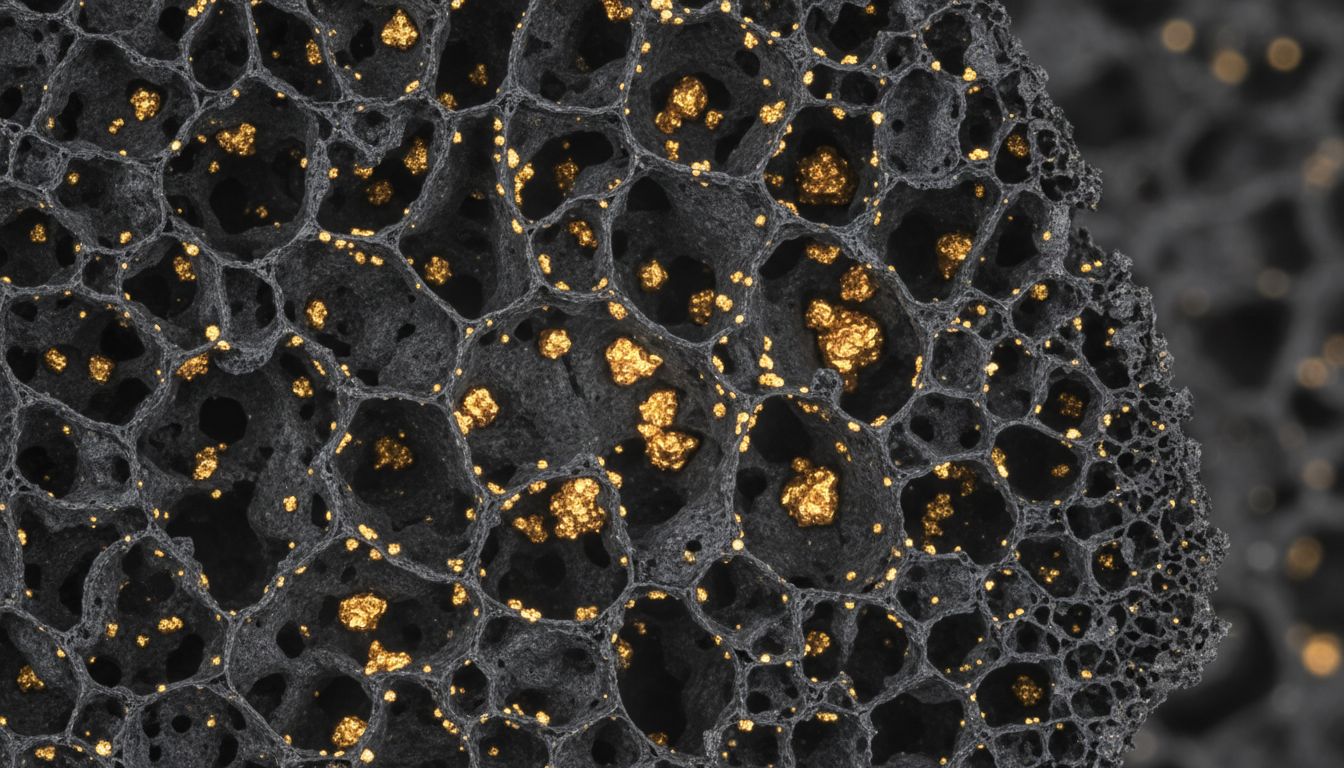
Two numbers matter here: K-value and R-value. The higher the K value, the higher the gold adsorption capacity. This tells you how much gold the carbon can hold at equilibrium. The higher the R-value, the faster the rate of gold adsorption.
You’ll also see iodine values listed. Iodine value (950mg/g or higher) is a proxy for total surface area. The higher the iodine value of the activated carbon, the more developed its pores are and the higher the gold carrying capacity and adsorption rate of the activated carbon under certain working conditions. But there’s a trade-off with hardness that manufacturers need to balance.
Density and Physical Properties
The density of wet activated carbon is between 1.3 and 1.5, so the ore pulp must be in this region in order for the carbon to be evenly suspended in the ore pulp. If your carbon density doesn’t match your pulp density, you’ll get poor mixing and lower recovery rates.
Surface area (≥1400m²/g) gives you the real adsorption potential. More surface area means more sites for gold complexes to attach. Quality carbon should also show ash content should remain below 10%, and moisture below 5%.
Coconut Shell vs Other Materials
In the recovery process of gold and silver, more than 95% of the carbon used is steam-activated coconut-based carbon. There’s a reason for this dominance. Coconut shell based activated carbon has been found to be the most suitable carbon for this application at present.
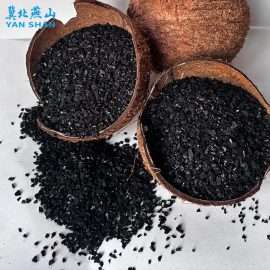
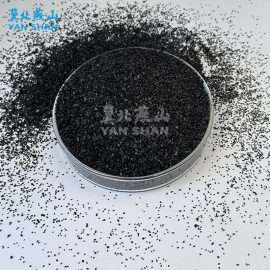
The microstructure of coconut shell carbon creates the right pore sizes for gold-cyanide complexes. Coconut shell activated carbon has high hardness and abrasion resistance, which can withstand the complex hydrodynamic conditions in the gold recovery process and reduce the loss of activated carbon. We offer both granular and powdered forms to match your process requirements.
Testing and Quality Control
Buying carbon on price alone is a mistake. For gold recovery circuits, it is essential that the activated carbon employed provides excellent process performance, minimal attrition loss and minimal maintenance problems.
Ask your supplier for test data on actual gold adsorption, not just iodine numbers. Look for certificates showing hardness tests, ash content, and particle size distribution. At Yanshan Carbon, we provide complete test reports with every shipment, so you know exactly what you’re getting.
Conclusion
Gold recovery carbon specifications aren’t academic details. They’re the difference between hitting 95% recovery or settling for 85%. Mesh size determines your screening efficiency and adsorption speed. Hardness controls your carbon consumption and gold losses to fines. Adsorption capacity and kinetics drive your circuit design and gold loading.
Look for carbon with 6-12 or 8-16 mesh sizing, hardness above 97%, iodine values over 950mg/g, and surface area above 1400m²/g. Coconut shell carbon delivers the best combination of properties for most operations. But specs are just numbers on paper until you verify them with your supplier and test them in your circuit.
FAQs
What mesh size is best for CIP gold recovery circuits?
Most operations use 6×12 mesh (1.68-3.36 mm) or 8×16 mesh (1.19-2.38 mm). The 6×12 size offers easier screening and lower pressure drop, while 8×16 provides faster adsorption kinetics. Your choice depends on your screen equipment and whether you prioritize adsorption speed or operational simplicity. Test both sizes in your specific circuit to see which performs better.
How do you measure activated carbon hardness for gold recovery?
Ball-Pan Hardness and Jet Cup Attrition tests are the industry standards. Carbon samples are tumbled with steel balls or subjected to air jets, then screened to measure how much breaks into fines. Results above 97% indicate carbon hard enough for gold recovery use. Higher hardness means less carbon loss and fewer gold losses to fines during normal operation.
Why is coconut shell carbon preferred over coal-based carbon for gold recovery?
Coconut shell carbon offers superior hardness, lower ash content, and a pore structure better matched to gold-cyanide complex molecules. The tight microporous structure and high mechanical strength reduce attrition losses during the aggressive mixing and pumping in CIP/CIL circuits. While coal-based carbon costs less initially, coconut shell carbon’s longer lifespan and higher gold recovery rates typically deliver better economics.
What’s the difference between K-value and R-value in gold recovery carbon?
K-value measures gold adsorption capacity—how much gold the carbon can hold per unit weight at equilibrium. R-value measures adsorption rate—how fast the carbon picks up gold. You need both. High K-value means less carbon circulation and longer cycles between stripping. High R-value means smaller tanks and faster throughput. Quality carbon balances both parameters.
How often should activated carbon be replaced in gold recovery circuits?
Typical circuits consume about one inventory of carbon per year through attrition losses, with partial replacement happening continuously. The actual replacement rate depends on your ore characteristics, circuit design, and carbon quality. Harder carbon with better attrition resistance lasts longer. Monitor your carbon fines generation and gold losses to tailings to determine optimal replacement timing for your operation.