

Picking the right activated carbon for your application can feel overwhelming. With so many specs to consider—iodine value, surface area, particle size, ash content—where do you even start? We’ll break down the key parameters that matter most and show you how to match them to your specific needs. Whether you’re treating water, purifying air, or working in industrial settings, understanding these fundamentals puts you in control.
Understanding Iodine Value and What It Tells You
Iodine value refers to the ability of activated carbon to adsorb iodine, iodine value unit is in mg/g. Think of it as a quick snapshot of adsorption power. Iodine number is the most fundamental parameter used to characterize activated carbon performance. It is a measure of activity level (higher number indicates higher degree of activation) often reported in mg/g (typical range 500–1200 mg/g).
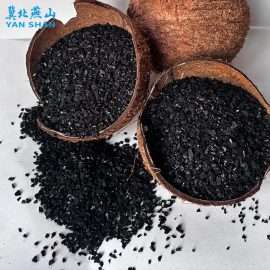
For liquid-phase applications like water treatment, activated carbon used for drinking water purification typically has iodine values between 800-1200 mg/g. But here’s the thing—a high iodine number doesn’t guarantee better results for every job. Iodine value is an important indicator for measuring the adsorption performance of activated carbon, but it is not the only factor. The performance of activated carbon is also influenced by factors such as pore structure, ash content, mechanical strength, and others. You need to look at the whole picture.
When browsing our coconut shell activated carbon or coal-based activated carbon options, pay attention to the iodine values listed—they’ll give you a starting point for comparison.
Surface Area and Pore Structure Matter
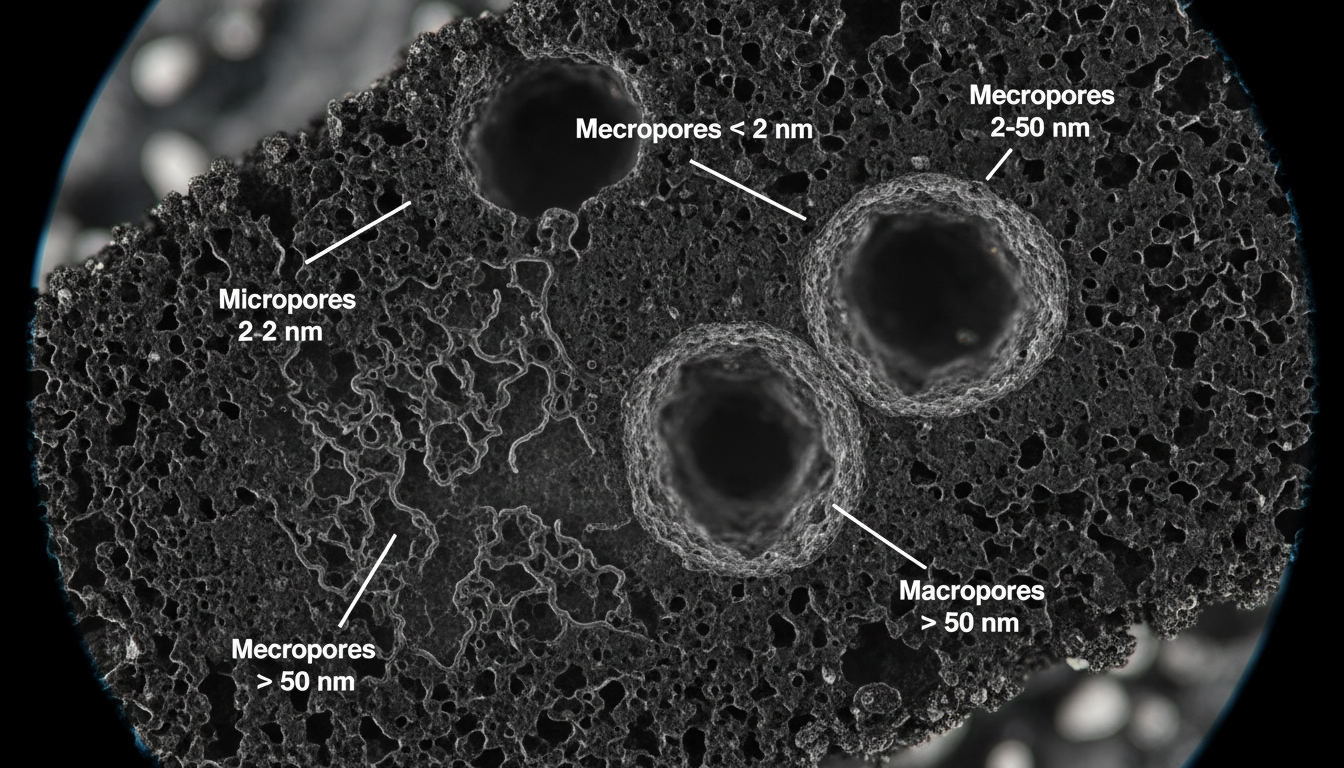
Surface area refers to the total area available on the surface of activated carbon particles for adsorption. Due to its porous structure, activated carbon can have a surface area ranging from 500 to 2000 square meters per gram. That’s like cramming a football field into a teaspoon.
But surface area alone won’t cut it. High surface area alone isn’t enough—it’s the combination of surface area and appropriately sized pores that allows activated carbon to be highly effective. The pore structure breaks down into three categories: Micropores: Pores with diameters less than 2 nm. Micropores are primarily formed by the graphite microcrystalline structure of activated carbon, exhibiting strong adsorption capacities for small molecules. Mesopores range from 2 to 50 nm, while macropores exceed 50 nm.
Water Filtration: Benefits from mesopores for organic contaminants and micropores for chlorine and chloramine. If you’re removing tiny dissolved organics, you’ll want rich micropores. For larger molecules or faster flow systems, mesopores become your friend.
Mesh Size and Particle Distribution

Activated carbon mesh size refers to the particle size distribution of activated carbon in granular or powder form. Mesh size is an important consideration when selecting activated carbon for a particular application as it can affect adsorption capacity, flow rate and pressure drop across the carbon bed.
Granular activated carbon typically comes in sizes like 8×30, 12×40. The most popular aqueous-phase carbons are the 12×40 and 8×30 sizes because they have a good balance of size, surface area, and head loss characteristics. Smaller particles give you faster adsorption but can create pressure drop issues. Larger particles allow better flow but might need longer contact time.
In general, smaller particles have a higher surface area per unit volume, which can lead to greater adsorption capacity, but can also lead to higher pressure drop and slower flow rates. We offer both granular and powdered forms to match your system requirements.
Ash Content and Purity Considerations
Ash content is one of the main indicators for measuring the purity of activated carbon. In general, the lower the ash content in activated carbon, the higher the purity and the better its adsorption performance. Ash takes up space where contaminants should be getting trapped.
Coal-Based Carbons: Generally possess higher ash content due to inherent mineral impurities. Coconut Shell-Derived Carbons: Offer lower ash levels, making them ideal for high-purity applications. This explains why coconut shell varieties command premium prices in food and pharmaceutical applications—their natural purity saves processing steps.
For drinking water or food-grade work, A process whereby the activated carbon is washed by acid to remove the water-soluble ash. Acid washed activated carbon is desirable for treating drinking water and food grade applications. Lower ash means fewer minerals leaching into your final product and better long-term performance.
Hardness and Mechanical Strength
Strength refers to the ability of activated carbon to resist crushing or pulverization under external forces (such as compression, impact or friction). It is a key physical parameter for the stable operation of activated carbon in various application environments.
Why does this matter? If your carbon breaks down into fines during handling or backwashing, you’ll lose material, create dust problems, and potentially clog downstream equipment. Typically, coconut shell-based activated carbon has better strength performance due to its dense microporous structure and high mechanical strength, making it suitable for applications with high strength requirements.
Fluidized bed systems, frequent backwashing operations, and high-flow applications all demand carbon that can take a beating without falling apart.
Matching Parameters to Your Application
Here’s where it all comes together. Nature of Contaminants: Are they large molecules, gases, or dissolved organics? Flow Rates: Higher flow systems may benefit from larger pores to reduce pressure drop. Contact Time: Microporous carbons may require longer contact time to achieve effective adsorption.
For water treatment targeting chlorine and small organics, you’ll want high iodine value (1000+ mg/g), predominantly microporous structure, 12×40 mesh, and low ash content. Air purification for VOCs needs balanced micro and mesopores, possibly coarser mesh for lower pressure drop, and hardness to withstand airflow forces.
Don’t forget about your raw material choice. We stock options from coconut shell, coal, apricot shell, and wood powder sources—each brings different natural characteristics to the table.
Conclusion
Choosing activated carbon gets simpler when you focus on the parameters that align with your goals. Iodine value shows adsorption potential for small molecules. Surface area and pore distribution determine what size contaminants you can capture. Mesh size balances adsorption speed against flow resistance. Ash content affects purity and lifespan. Hardness keeps your carbon intact through real-world conditions.
Start with your application requirements—what are you removing, from what medium, under what flow conditions? Match those needs to parameter specs. Test small batches before committing to bulk orders. And remember, the “best” carbon is the one that meets your performance targets at the right cost point.
Frequently Asked Questions
What’s the difference between iodine value and surface area?
Iodine value measures adsorption capacity for small molecules in liquid phase, typically correlating to 900-1100 m²/g surface area. Surface area (measured by BET method) shows total adsorption sites available. Both matter, but iodine value is simpler to test and widely used for liquid applications. High iodine value usually indicates high surface area, but surface chemistry and pore accessibility also play roles.
Can I use the same activated carbon for water and air applications?
Not really. Water treatment needs carbons optimized for liquid-phase adsorption with rich micropores (high iodine value). Air purification requires gas-phase carbons with balanced pore sizes and high CTC values. The particle size, hardness requirements, and pore structure differ significantly between these applications. Using the wrong type reduces efficiency and wastes money.
How often should I replace activated carbon in my system?
It depends on contaminant load, flow rate, and carbon bed size. Monitor breakthrough—when contaminants start appearing in treated output—or track pressure drop increases. For drinking water, 6-12 months is common. Industrial applications might see 3-6 month cycles with heavy contamination. Regular water quality testing tells you when performance drops below acceptable levels.
Why do coconut shell carbons cost more than coal-based options?
Coconut shell activated carbon has naturally lower ash content, higher hardness, and better micropore development than coal-based varieties. The raw material is more expensive and yields less finished product per ton. But you get superior purity for food and pharmaceutical uses, longer service life, and better performance in demanding applications—often justifying the higher upfront cost.
Does higher iodine value always mean better performance?
No. Iodine value indicates micropore volume and works well for small molecule adsorption. But if you’re targeting large organic molecules or need rapid kinetics, mesopore content matters more than iodine number alone. Match the parameter to your specific contaminant profile. Sometimes a moderate iodine value with optimal pore distribution outperforms ultra-high iodine carbon for your particular job.