

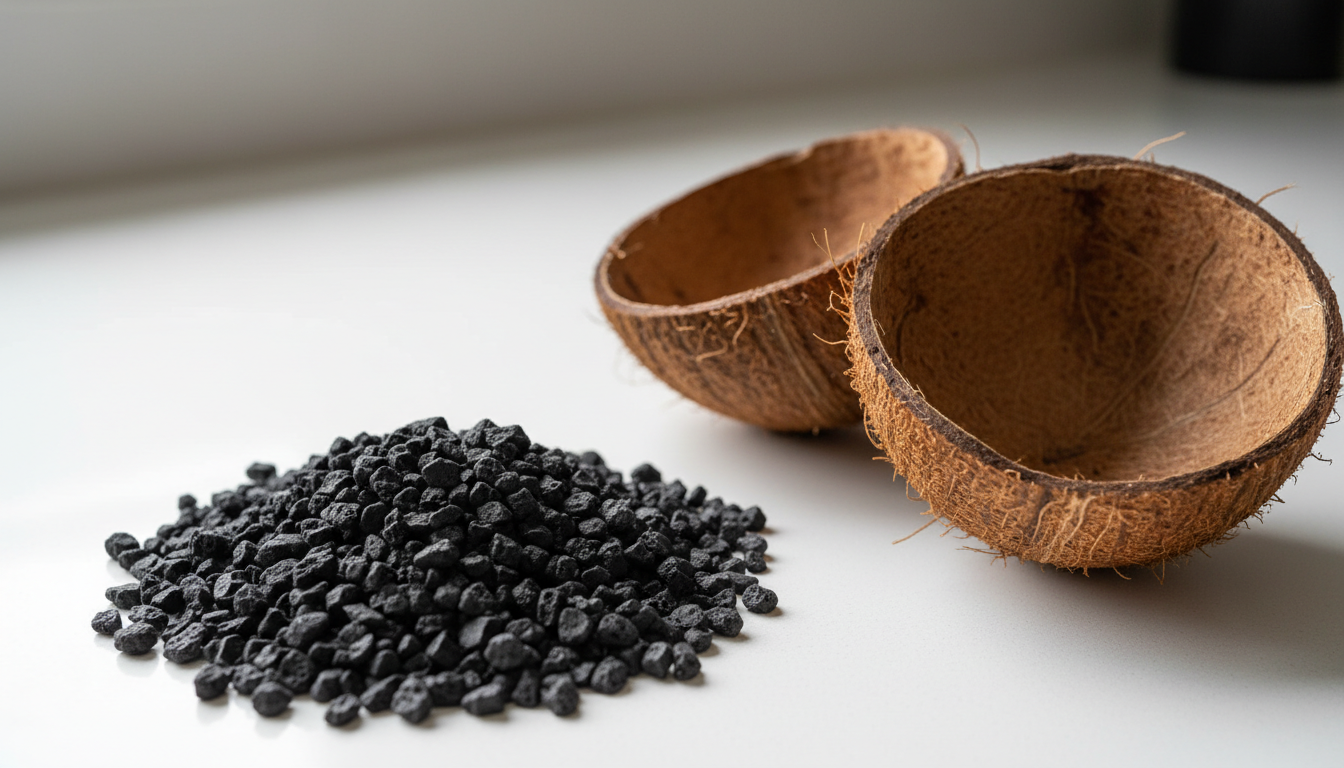
Coconut shell activated carbon stands out as one of the most effective filtration materials on the market today. We’re seeing manufacturers turn agricultural waste into a high-value product that purifies water, cleans air, and supports dozens of industrial applications. The transformation from a hard brown shell to a porous carbon powerhouse involves careful processing, precise temperature control, and specialized equipment.

In this guide, we’ll walk you through the complete manufacturing process for producing activated carbon from coconut shells. Whether you’re exploring production options for your business or want to understand the science behind this material, you’ll find practical insights on every step from raw material selection to final packaging.
Why Coconut Shells Make Superior Activated Carbon
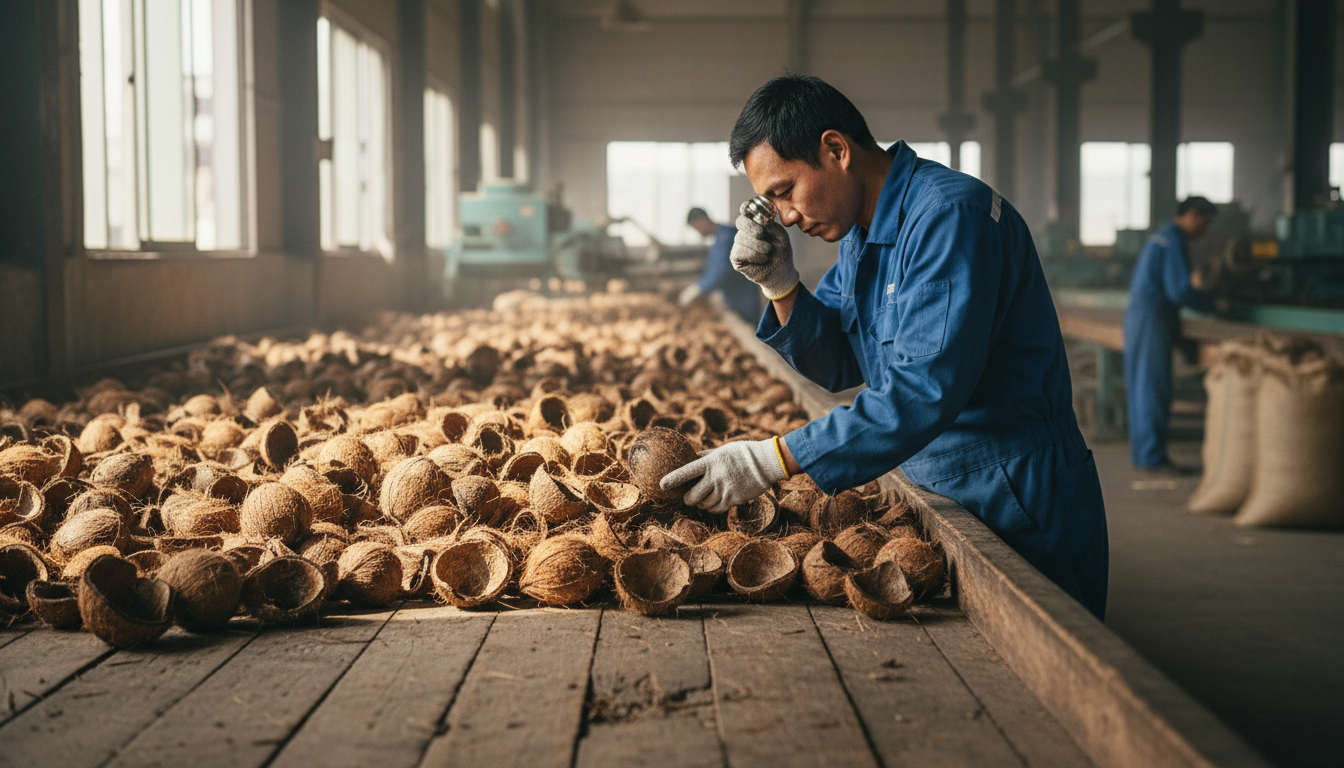
Coconut shells offer unique advantages as a raw material. The shells have a naturally high carbon content—around 19% fixed carbon—and low ash content at just 3.64%. This composition gives coconut shell activated carbon exceptional hardness and durability.
The micropore structure sets this material apart from alternatives. About 85-90% of the surface area consists of micropores, which perfectly match the size of contaminants in drinking water. Compare that to coal-based activated carbon, which has a more varied pore distribution, or wood-based options that lean toward larger mesopores and macropores.
Plus, coconut shells come from a renewable resource. Coconut plantations continue producing year-round, providing a steady supply of shells that would otherwise go to waste. Countries like the Philippines, India, Indonesia, and Sri Lanka produce millions of tons annually.
Sourcing and Preparing Raw Materials
Start with high-quality mature coconut shells. We recommend selecting shells from agricultural industries or coconut processing plants that already separate the shells from the meat and milk. Look for shells with thick, dense walls—these produce better-quality activated carbon.
The preparation process begins with cleaning. Wash the shells with warm water to remove surface dirt, coconut fibers, and any residual organic matter. Rinse thoroughly with clean water to eliminate contaminants that could affect the final product quality.
After washing, dry the shells completely. Many producers use solar drying to reduce costs, but you can also dry shells in an oven at 105°C for 24 hours to remove all moisture. Dried shells store easily and prevent mold growth during storage.
Next comes crushing and grinding. Feed the dried shells through industrial crushers to reduce particle size, typically to pieces less than 2mm. Smaller, uniform particles carbonize more evenly and give you better control over the activation process. Screen the crushed material to separate oversized pieces.
Carbonization: Creating the Carbon Base
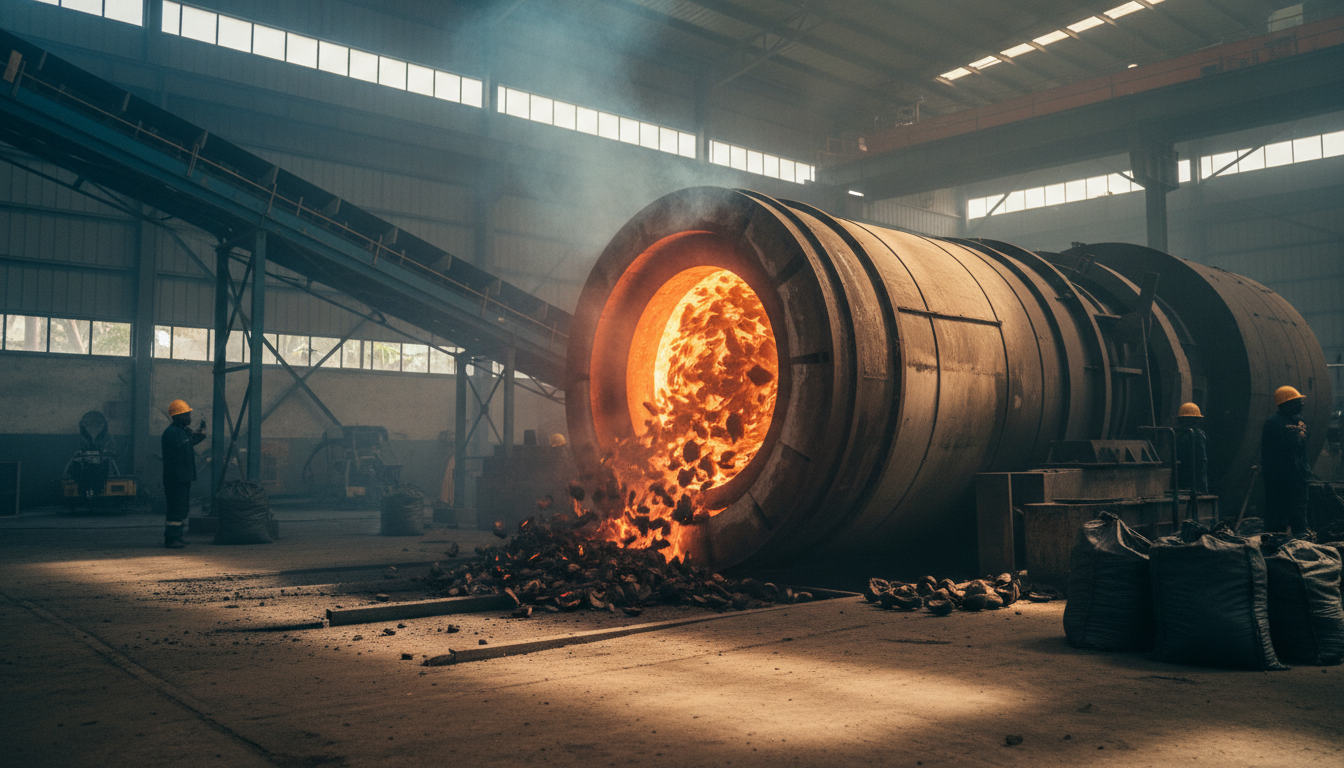
Carbonization transforms coconut shells into charcoal—the foundation for activated carbon. This step happens at temperatures between 300°C and 600°C in an oxygen-free or oxygen-limited environment. Without sufficient oxygen, the shells don’t burn to ash but instead break down into carbon.
The process typically uses a rotary kiln, drum kiln, or specialized carbonization furnace. Load the crushed coconut shells into the equipment and heat gradually. The kiln needs controlled airflow—too much oxygen and your material burns away, too little and carbonization takes forever.
During carbonization, volatile compounds like hydrogen, oxygen, tar, and organic vapors escape, leaving behind a carbon-rich charcoal structure. This stage usually takes 3-6 hours depending on temperature and equipment. You’ll know it’s working when you see the material turn black and the volatile content drops below 20%.
Timing matters. In drum kilns, watch for the bottom layer to show a glowing orange color—this signals proper carbonization. Then you enter the “pacification phase” where airflow stops and the charcoal cools. Pull the material too early and it won’t activate properly. Wait too long and it burns to ash.
The yield from carbonization is roughly 30% of the original coconut shell mass. The remaining 70% releases as volatiles including methane, CO2, water vapor, and bio-oils. Some manufacturers capture and burn these gases to help heat the kiln, improving energy efficiency.
Physical Activation with Steam
Physical activation using steam is the most common and environmentally friendly method for producing coconut shell granular activated carbon. This process enlarges the pore structure and dramatically increases the internal surface area.
Transfer the carbonized charcoal to an activation furnace or fluidized bed reactor. Heat the material to temperatures between 800°C and 1,100°C while introducing steam as the activating agent. The high temperature causes oxidation reactions between the steam and carbon atoms on the internal surfaces.
These reactions create and expand the microporous network throughout each carbon particle. The steam essentially burns away some carbon atoms, forming new pores and enlarging existing ones. The result is a highly porous structure with surface areas reaching 500-1,500 m²/g.
Temperature control is critical. Below 800°C, activation proceeds too slowly. Above 1,100°C, you risk burning too much carbon and reducing your yield. The sweet spot lies between 900°C and 1,050°C for most applications.
Activation time also affects the final product. Longer activation times increase pore development but reduce yield. Most operations run activation for 1-3 hours. You can adjust both temperature and time to customize pore sizes for specific applications—smaller pores for gas adsorption, slightly larger for water treatment.
Chemical Activation Method
Chemical activation offers an alternative approach that works at lower temperatures and produces activated carbon with different characteristics. This method uses chemical reagents like phosphoric acid (H₃PO₄), zinc chloride (ZnCl₂), potassium hydroxide (KOH), or sodium hydroxide (NaOH).
The process starts with impregnating crushed coconut shells with the chemical activator before carbonization. Mix the shells with the chemical solution at specific ratios—typically 1:1 to 2:1 activator to shell by weight. Let this mixture soak for 12-48 hours so the chemical penetrates thoroughly.
Then heat the impregnated shells to temperatures between 400°C and 600°C. The chemical activator causes crosslinking and polycondensation reactions that create the porous structure during carbonization. Research shows NaOH activation can produce surface areas up to 516 m²/g.
After heating, wash the activated carbon multiple times with water to remove residual chemicals. This washing step is necessary but creates wastewater that needs proper treatment. Acid washing followed by water rinsing ensures high purity and low ash content.
Chemical activation typically yields more product than steam activation and requires less energy. But the chemical costs, equipment corrosion, and wastewater treatment make it more expensive overall. We see it used mainly for specialized applications requiring uniform micropore structures, like pharmaceutical processing and food-grade applications.
Washing, Drying, and Sizing
After activation, the carbon needs post-processing to meet quality standards. Washing removes ash, residual chemicals, and loose carbon fines. Use both acid washing and water washing in sequence. The acid wash pulls out impurities and heavy metals, while water washing brings the pH to neutral levels.
Drain the washed carbon and move it to drying equipment. Most operations use rotary dryers or flash dryers at controlled temperatures to reduce moisture content to 5-10%. Proper drying prevents microbial growth during storage and maintains the porous structure.
Next comes sizing. Different applications require different particle sizes. Coconut shell powdered activated carbon passes through an 80-mesh screen or finer. Granular varieties come in standard sizes like 6×12 mesh, 8×16 mesh, 12×40 mesh, or custom specifications.
Feed the dried carbon through grinding mills if you need powdered carbon, or use screening equipment to separate granular products by size. Oversized particles go back through the grinder. Fines can either be sold as powder or recycled into the next batch.
Quality Testing and Specifications
Before packaging, test the activated carbon to verify it meets specifications. The most common tests include:
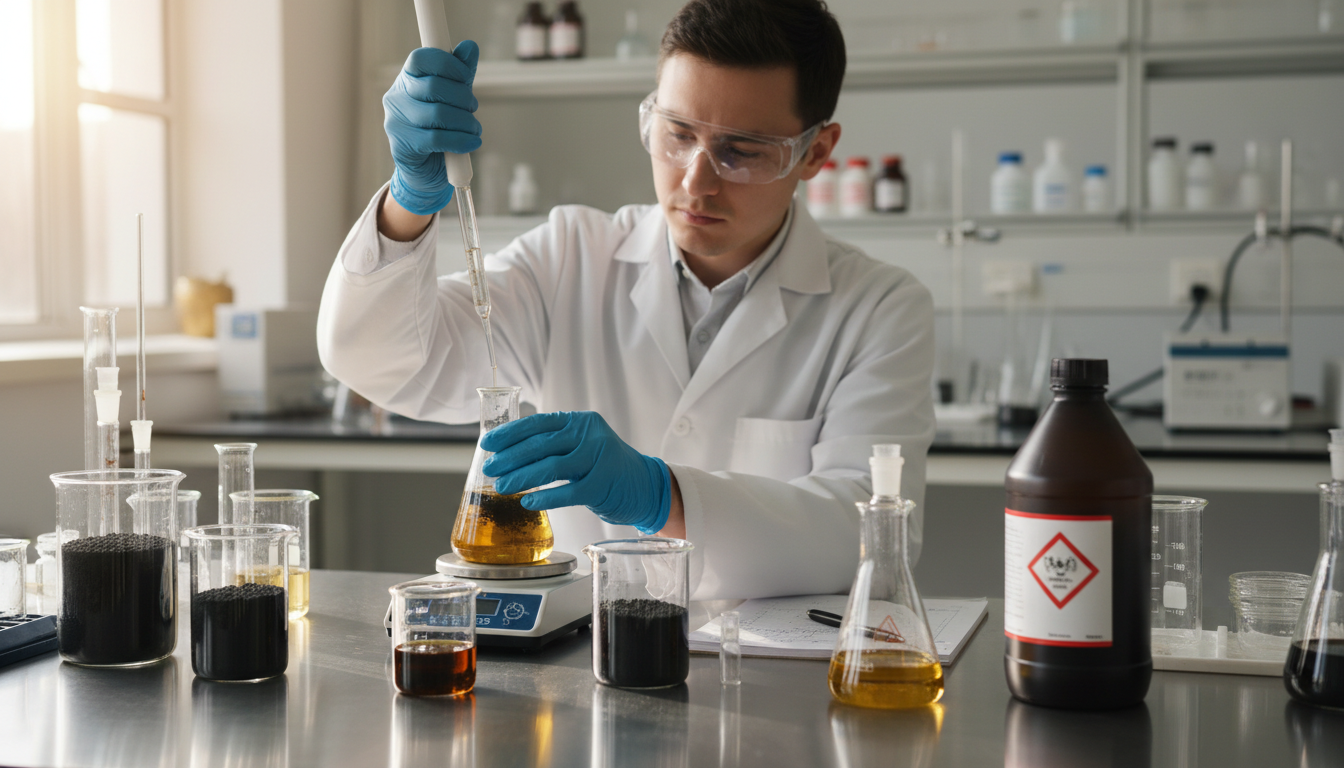
Iodine Number measures adsorption capacity. Higher numbers indicate better performance. Quality coconut shell activated carbon typically shows iodine numbers between 900-1,200 mg/g. This test predicts how well the carbon will remove small molecules from water.
BET Surface Area quantifies the total internal surface area available for adsorption. Good products range from 500-1,500 m²/g. More surface area generally means more adsorption capacity.
Ash Content should stay below 5% for most applications. Lower ash content means higher purity and better performance. Test by heating samples at high temperature and measuring the residue.
Moisture Content affects product weight and shelf life. Target 5-10% moisture. Too much water reduces the carbon’s effectiveness and can lead to mold. Too little makes the product dusty.
Hardness measures mechanical strength. Coconut shell activated carbon typically shows hardness above 90%, meaning it resists breaking during handling and use. This matters for applications where the carbon undergoes friction or pressure.
Particle Size Distribution confirms the product meets mesh specifications. Use standard sieve analysis to check that at least 90% falls within the target size range.
Packaging and Storage
Pack the finished activated carbon in moisture-resistant containers. Standard packaging uses 25kg bags with double-layer woven material for durability and moisture protection. Large-scale buyers often prefer 500kg or 1,000kg jumbo bags for easier handling.
Seal packages tightly to prevent moisture absorption from the air. Activated carbon is hygroscopic—it naturally pulls water from the environment. Excessive moisture reduces the available pore space and lowers performance.
Store packaged carbon in a dry, well-ventilated warehouse away from chemicals with strong odors. The carbon will adsorb airborne contaminants if exposed, reducing its effectiveness for end users. Proper storage maintains product quality for 2-3 years.
Label each package clearly with product specifications, batch number, production date, and any relevant certifications. This traceability helps quality control and customer confidence.
Equipment and Production Considerations
Setting up activated carbon production requires specific equipment. At minimum, you’ll need crushers, dryers, a carbonization kiln, an activation furnace, washing tanks, screening equipment, and packaging machines. A rotary kiln works well for both carbonization and activation if you choose steam activation.
Energy costs represent a major expense. Carbonization and activation both require sustained high temperatures. Consider systems that capture and reuse heat from exhaust gases. The bio-oils and combustible gases released during carbonization can fuel the heating process, significantly reducing external energy needs.
Location matters. Proximity to coconut shell sources lowers transportation costs. Access to reliable water and electricity is necessary. Check local environmental regulations regarding air emissions and wastewater treatment before starting.
For comparing different activation methods and materials, check out our guide on wood vs coconut shell activated carbon differences. The production approaches share similarities but yield products with distinct characteristics.
Conclusion
Manufacturing activated carbon from coconut shells involves a systematic process: sourcing quality shells, thorough cleaning and crushing, carbonization at 300-600°C, activation at 800-1,100°C using steam or chemicals, washing to remove impurities, drying and sizing to specifications, and proper packaging for storage. Each step requires careful temperature control and quality monitoring to produce a high-performing final product.
The choice between physical steam activation and chemical activation depends on your target applications, available equipment, and budget. Steam activation produces cleaner carbon with less environmental impact, while chemical methods offer higher yields and specialized pore structures. Both approaches can deliver activated carbon with surface areas exceeding 500 m²/g and iodine numbers above 900 mg/g.
With coconut shells readily available as agricultural waste and growing demand for water purification and air filtration, the market outlook for quality activated carbon remains strong. The manufacturing process transforms waste into value while supporting environmental sustainability.
FAQs
What temperature is needed for carbonizing coconut shells?
Carbonization occurs at 300-600°C in an oxygen-limited environment. Most commercial operations use 500-600°C for 3-6 hours to properly break down the shells into charcoal while removing volatile compounds. This temperature range prevents complete combustion while eliminating about 70% of the original mass.
What’s the difference between steam activation and chemical activation?
Steam activation uses high temperatures (800-1,100°C) and water vapor to create pores through oxidation reactions. Chemical activation uses lower temperatures (400-600°C) with chemicals like phosphoric acid or sodium hydroxide. Steam activation is cleaner and more environmentally friendly, while chemical activation offers higher yields but requires wastewater treatment.
What yield can you expect from coconut shells to activated carbon?
Carbonization reduces the original shell mass by about 70%, leaving 30% as charcoal. Activation further reduces this by 20-40%, depending on the method and duration. Overall, you can expect 15-25% final yield—so 100kg of dried coconut shells produces roughly 15-25kg of finished activated carbon.
Can you make activated carbon at home from coconut shells?
While possible to make basic charcoal at home, producing true activated carbon requires temperatures of 800-1,100°C and controlled atmospheres that aren’t safe or practical in home settings. Commercial manufacturing uses specialized kilns and safety equipment to handle the high temperatures, chemical reactions, and emissions involved in proper activation.