

Spent coconut shell activated carbon doesn’t have to go to a landfill. With the right reactivation process, you can restore its adsorption capacity and reuse it — saving money, cutting waste, and keeping your filtration systems running strong. We’ll walk you through every method that works.
If you’ve used coconut shell activated carbon in water treatment, air purification, gold recovery, or any other industrial process, you already know it doesn’t last forever. Over time, contaminants fill up the carbon’s pores. The material becomes saturated, and performance drops. At that point, you’re looking at spent carbon — and you need a plan. You can toss it, or you can reactivate it and squeeze more life out of every batch.
At Yanshan, we produce high-quality coconut shell activated carbon with iodine numbers between 900–1,200 mg/g and surface areas reaching 500–1,500 m²/g. That kind of quality gives you a strong starting point for reactivation, because the better the original carbon, the more effectively it can be restored. We’ve seen this firsthand across decades of manufacturing, and we want to share what we know so you can make the smartest call for your operation.
Before we dive into methods, let’s get one thing straight: the terms “regeneration” and “reactivation” get tossed around like they’re the same thing. Technically, they’re different — regeneration partially restores adsorption capacity, while reactivation aims to fully restore it through high-temperature processing. But in practice, most people in the industry use these terms interchangeably, and we’ll do the same here.
What Is Spent Carbon and Why Reactivate It?
Activated carbon works by trapping contaminants inside its network of tiny pores. Coconut shell activated carbon is especially good at this because about 85–90% of its surface area consists of micropores — the right size for catching pollutants in drinking water, industrial wastewater, and gas streams. But as those pores fill up with adsorbed compounds like organic chemicals, odors, solvents, and heavy metals, the carbon loses its ability to grab more. That’s when we call it “spent.”
You have three options for dealing with spent carbon: send it to a landfill, incinerate it, or reactivate it. Landfilling is the cheapest upfront, but it creates long-term disposal liabilities and wastes a material that still has value. Incineration destroys the carbon entirely. Reactivation, on the other hand, restores the adsorption capacity so the same carbon goes back to work. It’s the only option that turns waste into a reusable asset.
The numbers back this up. The global activated carbon recycling and reactivation service market hit an estimated $1,069 million in 2024 and is projected to grow at a CAGR of 7.5% through 2031. That growth is driven by tighter environmental regulations, corporate sustainability goals, and the simple fact that reactivated carbon costs a lot less than buying virgin material every time. If you’re running a facility that uses granular activated carbon in any volume, reactivation should be on your radar.
To get a full picture of how coconut shell activated carbon is made in the first place — and why the manufacturing process matters for reactivation success — check out our complete production guide.
Thermal Reactivation: The Industry Standard
Thermal reactivation is the most widely used and most mature method for restoring spent coconut shell activated carbon. It works on granular activated carbon (GAC) and pelletized carbon, though it’s rarely practical for powdered activated carbon (PAC) due to the fine particle size and handling challenges.
The process follows three stages, each tied to a specific temperature range:
Stage 1 — Drying (around 105°C / 221°F). The spent carbon is heated to drive off surface moisture. This step gets the material ready for higher-temperature processing without causing sudden thermal shock.
Stage 2 — High-Temperature Carbonization (500–900°C / 932–1,652°F). Here, the adsorbed organic compounds start to break down. Some boil off and vaporize. Others decompose into smaller molecules and escape as gases. Residual organics that don’t fully volatilize become charred deposits inside the pores. This stage happens under a vacuum or inert atmosphere to prevent the carbon itself from burning.
Stage 3 — Activation (800–1,000°C+ / 1,470–1,800°F+). Steam or CO₂ is injected into the furnace to gasify the charred residue left behind in stage two. This is the step that actually reopens the pores and restores the carbon’s internal surface area. The steam reacts with carbon atoms on the pore walls (C + H₂O → H₂ + CO), clearing out blockages and regenerating the microporous structure.
The two most common types of equipment used for thermal reactivation are rotary kilns and multiple hearth furnaces. A study from the U.S. EPA compared these two approaches and found that rotary kilns have lower total process costs and require less skilled operators, while multiple hearth furnaces last longer and use about half the fuel. Both get the job done — the choice depends on your scale, budget, and operational setup.
During thermal reactivation, you can expect carbon losses of about 5–15% per cycle. That lost material gets replaced with fresh makeup carbon to keep batch volumes consistent. Even with that loss, reactivated carbon can restore up to 95% of its original adsorption capacity, making it a solid performer for most applications. Research has shown that steam reactivation can produce iodine numbers of 1,103 mg/g and methylene blue adsorption of 380 mg/g — numbers that match or even beat fresh carbon in some cases.
One thing to keep in mind: the pollutants released during thermal reactivation are toxic and can get more toxic at high temperatures. That’s why the process runs in a controlled, oxygen-free environment, and released gases go through afterburners, scrubbers, or other emissions control systems before hitting the atmosphere. This isn’t something you can safely do in a backyard or a kitchen oven. It takes professional-grade equipment and proper environmental controls.
Chemical and Biological Reactivation Methods
While thermal reactivation is the go-to for most operations, chemical and biological methods fill specific niches where thermal processing isn’t the best fit.
Chemical reactivation uses acids, bases, or solvents to strip adsorbed contaminants from the carbon’s pores. Common chemicals include hydrochloric acid (HCl), sulfuric acid (H₂SO₄), nitric acid (HNO₃), and sodium hydroxide (NaOH). The idea is simple: the chemical dissolves or displaces the contaminants so the pore space opens back up. A peer-reviewed study on CIP (carbon-in-pulp) gold recovery carbon found that acid washing with HNO₃ at 20% concentration and 50°C for 30 minutes, followed by thermal reactivation at 850°C for one hour, delivered the best results — with ball-pan hardness holding steady at 98% and good restoration of micro, meso, and macro porosity.
Chemical reactivation works best as a pre-treatment step before thermal reactivation rather than a standalone method. Acid washing pulls out inorganic deposits like calcium, magnesium oxides, and clays that block pores — stuff that heat alone won’t fully remove. When you combine acid washing with thermal processing, you get a more complete restoration of the carbon’s adsorption properties.
Biological reactivation (also called bio-regeneration) takes a completely different approach. It uses microorganisms — bacteria or fungi — to eat the organic compounds trapped inside the carbon’s pores. The microbes break down these organics into water and CO₂, gradually freeing up pore space. This method works in situ, meaning the carbon stays in the treatment system while the biology does its thing. It’s most practical in wastewater treatment plants where microbial populations are already present and maintained. Biological reactivation won’t fully restore a severely exhausted carbon, but it can extend the working life of a carbon bed between thermal reactivation cycles.
There are also newer methods gaining traction in research, like microwave-assisted reactivation and electrochemical regeneration. Microwave reactivation has shown strong results in lab settings — one study found it restored approximately 83% to 90% of fresh carbon’s adsorptive capabilities when done under a CO₂ atmosphere. It heats faster, uses less energy, and causes less structural damage to the carbon compared to conventional furnaces. But for now, these newer methods haven’t fully scaled to industrial use.
Why Coconut Shell Carbon Reactivates Better
Not all activated carbon reactivates equally. The raw material matters, and coconut shell carbon has built-in advantages that make it one of the best candidates for reactivation.
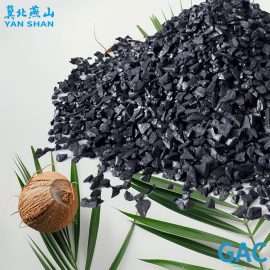
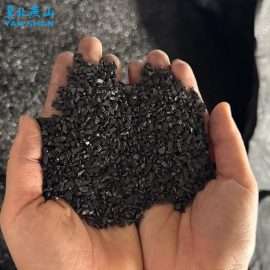

First, hardness. Coconut shell activated carbon typically scores above 90% on the ball-pan hardness test. That means it holds up to the mechanical stress of handling, transport, and the reactivation process itself without crumbling into fines. Compare that to softer wood-based or some coal-based carbons, which break down faster with each reactivation cycle. Less breakage means less material loss per cycle and more usable carbon coming back to you.

Second, low ash content. Coconut shells naturally have low ash — around 3.64% in raw form, and well-processed coconut shell activated carbon keeps ash below 5%. This matters because ash blocks pores and reduces reactivation efficiency. The lower the ash content in your starting carbon, the cleaner the reactivation and the better the restored performance. Regenerated carbon from other sources may show ash content of 3–8%, which eats into adsorption capacity.
Third, the micropore structure. Coconut shell carbon’s micropore-dominant structure (85–90% micropores) responds well to thermal reactivation because steam gasification at 800–1,000°C+ effectively clears micropore blockages. The result is a tighter, more uniform pore network after reactivation — exactly what you need for applications like drinking water purification, food and beverage processing, and gold recovery.
Here’s a quick comparison of how different carbon types stack up for reactivation:
| Property | Coconut Shell Carbon | Coal-Based Carbon | Wood-Based Carbon |
|---|---|---|---|
| Ball-Pan Hardness | >90% | 70–90% | 50–70% |
| Ash Content | <5% | 8–15% | 3–5% |
| Dominant Pore Type | Micropores | Mixed | Mesopores/Macropores |
| Reactivation Cycles | Multiple (high durability) | Moderate | Lower (softer structure) |
| Typical Carbon Loss Per Cycle | 5–10% | 8–15% | 10–20% |
This combination of hardness, low ash, and micropore dominance is why coconut shell activated carbon holds its value across multiple reactivation cycles — and why it’s the preferred choice for operations that plan on reactivating rather than replacing.
Cost Savings and Environmental Benefits
Let’s talk dollars and sense. Reactivated GAC typically costs 30–50% less than buying virgin activated carbon. For large-scale water treatment plants, gold mines, or industrial filtration operations cycling through tons of carbon every year, those savings add up fast. One industry estimate puts lifecycle cost reductions at 50–70% when you reactivate instead of buying new each time.
The environmental case is just as strong. Reactivation produces only about 20% of the greenhouse gas emissions generated by manufacturing virgin activated carbon. Put another way, regeneration and recycling yield a GHG footprint roughly 80% lower than using fresh carbon on a disposable basis. Per ton of regenerated carbon, you prevent about one ton of spent carbon from hitting a landfill and save an estimated 4.2 tons of CO₂ emissions compared to virgin carbon production.
These aren’t just feel-good numbers. They align with EPA guidelines, REACH regulations, and corporate sustainability targets that more and more U.S. companies are required to meet. If your operation uses significant volumes of granular activated carbon, reactivation helps you check both the budget box and the environmental compliance box at the same time.
For operations where reactivation makes sense, the typical service model works like this: your spent carbon gets collected and shipped to a reactivation facility (either your own on-site kiln or a third-party service provider). The facility runs the thermal process, adds makeup carbon to compensate for losses, tests the reactivated product for quality, and ships it back. Some providers offer “custom” or “toll” reactivation where you get your exact carbon back. Others run a “pool” model where spent carbon from multiple sources is processed together and redistributed. Both models work — it comes down to your application’s sensitivity and regulatory requirements.
When to Reactivate vs. Replace With Virgin Carbon
Reactivation makes sense in a lot of situations, but it’s not always the right call. Here’s how to think about it.
Reactivate when: you’re using granular or pelletized coconut shell activated carbon in medium-to-large volumes; your spent carbon is contaminated primarily with organic compounds that thermal processing can destroy; you want to lower operating costs without sacrificing performance; and your application allows for carbon that performs at 90–95% of virgin levels.

Replace with virgin carbon when: you’re working with powdered activated carbon (which is rarely cost-effective to reactivate); your carbon has been contaminated with heavy metals or inorganic compounds that thermal reactivation can’t fully remove; your application demands the absolute highest purity — such as certain pharmaceutical or food-grade uses; or the carbon has been through so many cycles that structural degradation makes another round impractical.
In gold recovery operations using CIP or CIL processes, reactivation is standard practice. The carbon goes through repeated loading and stripping cycles, and periodic thermal reactivation keeps it performing. On-site kilns are common at large mining operations for exactly this reason. For water treatment plants, shipping spent GAC to a reactivation service provider and getting restored carbon back is the norm.
If you’re not sure whether your spent carbon is a good candidate, talk to your supplier. At Yanshan, we help our clients figure out the best lifecycle strategy for their specific setup — whether that’s reactivation planning, fresh carbon supply, or a combination of both. With 35+ years of manufacturing experience and ISO 9001:2015 certification, we’ve seen just about every scenario and can guide you to the right choice.
FAQs
Can you reactivate coconut shell activated carbon at home?
No. True reactivation needs temperatures of 800–1,000°C+ in a controlled, oxygen-free environment. A kitchen oven, clothes dryer, or sunlight can’t reach those temperatures, and attempting it at home creates safety risks from toxic off-gases. Reactivation requires professional kilns and emissions control systems.
How many times can coconut shell activated carbon be reactivated?
Coconut shell carbon is one of the most durable types for reactivation thanks to its high hardness (>90% ball-pan hardness). You can reactivate it through multiple cycles, though each cycle results in 5–15% material loss and a small decline in adsorption capacity. The exact number of cycles depends on the contaminant type, reactivation conditions, and quality of the original carbon.
What’s the difference between regeneration and reactivation?
Technically, regeneration partially restores adsorption capacity (often through lower-temperature or chemical means), while reactivation aims for full restoration using high-temperature thermal processing. In practice, most industry professionals use the two terms interchangeably.
Is reactivated carbon as good as virgin activated carbon?
Close to it. Thermal reactivation can restore adsorption capacity to 90–95% of virgin levels. In some studies, steam-reactivated carbon has shown iodine and methylene blue values that match or exceed those of fresh carbon. However, regenerated carbon may have slightly higher ash content (3–8% vs. <3% for virgin), which can matter for sensitive applications.
How much does activated carbon reactivation cost compared to virgin carbon?
Reactivated GAC typically runs 30–50% less than new virgin carbon. When you factor in avoided disposal costs, reduced landfill liability, and lower CO₂ emissions, the total lifecycle savings can reach 50–70%. The exact savings depend on your volume, location, and the reactivation service model you choose.