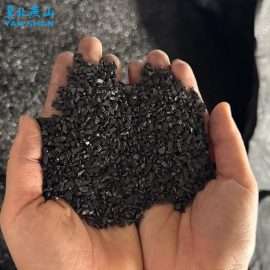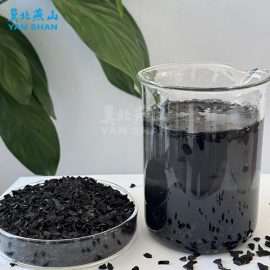

In the field of industrial wastewater treatment, activated carbon plays a key role in “deep purification” and “final checkpoint” as an efficient and reliable adsorbent due to its extremely developed pore structure and huge specific surface area.
1、 Core application: Removing pollutants
- Printing and dyeing wastewater: efficient decolorization, removing dyes and complex organic compounds such as benzene rings and naphthalene rings.
- Toxic substances: difficult to degrade substances that are toxic to microorganisms, such as adsorbed phenols, aniline, polycyclic aromatic hydrocarbons, etc.
- Surfactant: remove residual detergent and reduce foam in water.
- Effectively remove trace amounts of persistent pollutants such as pesticides, drugs, personal care products, and endocrine disruptors.
- After surface chemical modification, it can be specifically used for adsorbing heavy metals such as mercury, lead, cadmium, chromium, etc.
- Significantly reduce COD and BOD, especially adept at removing non biodegradable COD.
2、 Main application process
Activated carbon adsorption tower (fixed bed)
- Method: Wastewater penetrates the tower filled with granular activated carbon.
- Operation: Multiple towers are connected in parallel or series to ensure continuous operation, and can be replaced or regenerated after saturation.
- Features: Stable operation, suitable for large-scale continuous processing.
Powder activated carbon feeding system
- Method: Directly add powdered charcoal to the water tank, stir and mix for adsorption.
- Features: Flexible dosing, suitable for intermittent or auxiliary processing.
Related Products