

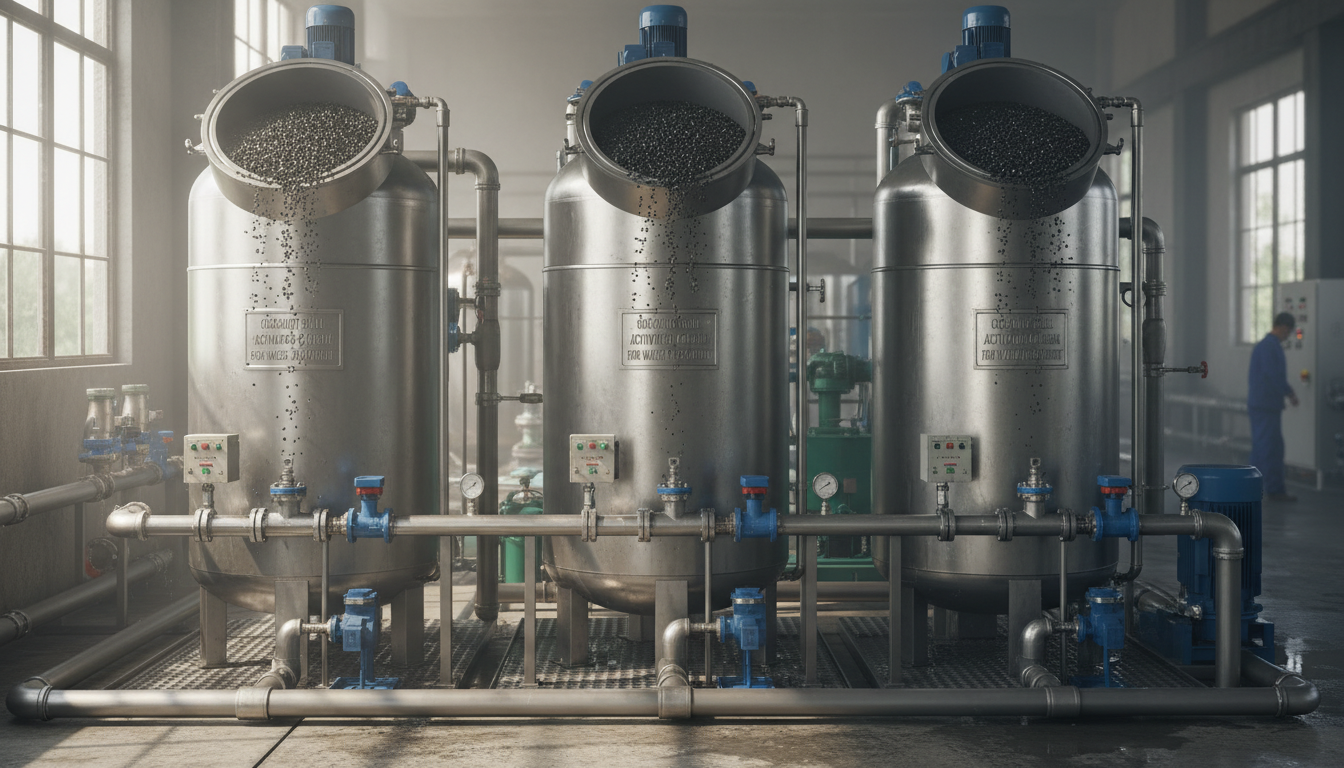
When you’re evaluating activated carbon for water treatment or filtration projects, you’ll see “iodine number” listed on every spec sheet. But what does this number actually tell you, and why should you care?
We’re here to break down the science behind iodine number testing and help you make smarter decisions about your activated carbon purchases. Whether you’re treating drinking water, managing industrial wastewater, or running a filtration system, knowing how to read and interpret this metric can save you time and money.
What Is Iodine Number?
Iodine number (sometimes called iodine value or iodine index) is the amount of iodine, measured in milligrams, that one gram of activated carbon can adsorb from a solution when tested under standardized conditions[7]. The amount of iodine absorbed (in milligrams) by 1 g of carbon using test conditions listed herein is called the iodine number[2].
Here’s the simple version: we measure how much iodine your carbon can grab from water. The iodine number is defined as the milligrams of iodine adsorbed by one gram of material when the iodine residual concentration of the filtrate is 0.02N (0.01 mol L-1) according to ASTM D4607 standard[4].
The iodine number is a relative indicator of porosity in an activated carbon and does not necessarily provide a measure of the carbon’s ability to absorb other species[2]. Think of it as a snapshot of one specific characteristic, not the whole picture.
Why Iodine Number Matters for Your Application
The iodine number (milligram of iodine adsorbed by one gram of carbon) which is a relative indicator of porosity of an activated carbon is usually used as an approximation of the surface area of an activated carbon[9].
But here’s what that really means for you: Since iodine is quite small, it can be a good indicator of the capacity an activated carbon has available in very small/high energy pores, and increasing iodine number correlates to increasing porosity[4].
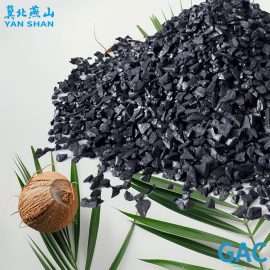
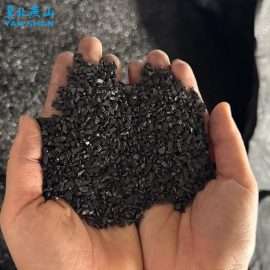
For our coconut shell activated carbon, you’ll typically see iodine numbers ranging from 800 to 1200 mg/g or even higher. Different based carbons have different iodine numbers, i.e. 600 (lignite), 800 (wood), 1000 (bituminous coal), 1200 (coconut)[1].
The higher the iodine number for activated carbon, the more it can adsorb the impurities in the solution, and the iodine value of activated carbon for liquid phase adsorption is at least 800 mg/g, while for more demanding applications the iodine value may reach 1700 mg/g[1].
Typical Iodine Number Ranges and Applications
Not all applications need the same iodine number. Here’s how to think about it:
Activated carbon used for drinking water purification typically has iodine values between 800-1200 mg/g[6]. For high-purity applications like semiconductor manufacturing or pharmaceutical production, activated carbon used for specific chemical production may require iodine values exceeding 1200 mg/g[6].
We’ve seen customers using coconut shell granular activated carbon with iodine numbers around 1000 mg/g get excellent results in municipal water treatment. Meanwhile, beverage companies often spec 1100+ mg/g for taste and odor removal.
Common ranges include 800, 850, 900, 950, 1000, and 1100 mg/g—higher values point to denser micropore volume and stronger adsorption performance, especially in liquid-phase applications[10].
What Makes Coconut Shell Carbon Different
Coconut shell activated carbon has a tremendous number of small pores, hence a higher iodine number[1]. Coconut shell based activated carbons has Lower Ash Content, Higher Amount of Micropores, Higher Iodine Number, Excellent Hardness and it is very efficient in the removal of small size organic impurities[4].
Almost 85-90% surface area of coconut shell activated carbon exists as micro-pores[4]. That’s why coconut shell carbon consistently shows higher iodine numbers than coal-based activated carbon or wood powder activated carbon.
Coal-based activated carbon is usually alkaline and has a high pH, while coconut shell-based activated carbon is closer to neutral[1]. This pH difference can matter depending on your application.
Beyond Iodine Number: Other Parameters to Consider
Look, iodine number tells you something useful, but it’s not the only thing that matters. Iodine value is an important indicator for measuring the adsorption performance of activated carbon, but it is not the only factor since the performance of activated carbon is also influenced by factors such as pore structure, ash content, mechanical strength, and others[6].
For water purification using coconut shell carbon, you should also check:
- Hardness number: Tells you how well the carbon holds up during backwashing
- Ash content: Lower is better for purity
- Moisture content: Affects how much active carbon you’re actually getting
- CTC value: Better for gas-phase applications than iodine number
Iodine number tells you about the carbon’s ability to handle small molecules in water, but to understand the full picture, you need these other tests too[7].
How to Choose the Right Iodine Number
Start with your application. Determining the desired iodine value for activated carbon depends on the specific application purpose and the characteristics of the media being treated, for example, applications that require the removal of trace organic pollutants from water may require activated carbon with a higher iodine value[6].
Don’t just go for the highest number you can find. If you need to remove medium or large molecules, an extremely high iodine number (above 1,400 mg/g) suggests the pores might be too small, and those molecules can’t access the internal surface, so all that micropore volume goes unused[7].
For most municipal drinking water applications, 900-1100 mg/g works great. Industrial wastewater might need 1000-1200 mg/g depending on what you’re treating. Specialty pharmaceutical or food-grade applications could push 1200+ mg/g.
We recommend working with your carbon supplier to match the iodine number to your actual treatment goals, not just picking the biggest number on the spec sheet.
Real-World Performance vs. Lab Numbers
Here’s something we’ve learned after years in this business: lab numbers matter, but field performance matters more. The iodine value of activated carbon is usually proportional to its production cost and market price, and activated carbon with a higher iodine value often requires stricter production processes and higher-quality raw materials, resulting in a higher price[6].
But that doesn’t mean the most expensive carbon is always the best choice for your job. We’ve seen operations save money by choosing apricot shell activated carbon or coal-based options when the application didn’t require coconut shell’s premium micropore structure.
The key is testing your actual water with candidate carbons. Jar tests and pilot runs tell you way more than spec sheets alone.
Conclusion
Iodine number gives you a reliable way to compare activated carbon products and estimate micropore content. For coconut shell activated carbon, you’re typically looking at 1000-1200 mg/g, which reflects its excellent micropore structure and high surface area.
But don’t make purchasing decisions based on iodine number alone. Consider your specific application, the contaminants you need to remove, flow rates, contact time, and budget. The “best” carbon is the one that meets your treatment goals at the lowest total cost over its service life.
Whether you’re specifying coconut shell powdered activated carbon for a food processing line or granular carbon for municipal treatment, understanding what iodine number tells you (and what it doesn’t) helps you make smarter choices.
FAQs
What’s the difference between iodine number and iodine value?
Nothing. These terms are used interchangeably in the industry and both refer to the same test measurement—some regions or companies prefer one term over the other, but they mean exactly the same thing[7].
Can coconut shell activated carbon have too high of an iodine number?
For certain applications, yes. When you need to remove larger molecules, extremely high iodine numbers (over 1400 mg/g) can indicate pores that are too small for those molecules to access. Match your carbon’s pore structure to your actual contaminants, not just the highest iodine number available.
How often should I test the iodine number of activated carbon?
For initial qualification when evaluating a new supplier or switching products, request third-party test results, for critical applications use periodic testing to ensure consistency, and after regenerating spent carbon, test to verify activity restoration (often 85-95% recovery)[7].
Does iodine number predict how long my carbon will last?
Not directly. While higher iodine numbers suggest more adsorption capacity, service life depends on many factors including contaminant loading, flow rate, bed depth, and regeneration frequency. Iodine number is just one piece of the puzzle.
What iodine number should I specify for drinking water treatment?
Most drinking water applications work well with 900-1100 mg/g. If you’re targeting specific contaminants like pharmaceuticals or taste and odor compounds, you might want 1000-1200 mg/g. Start with your water quality data and work backward to the right specification rather than just picking a number.