

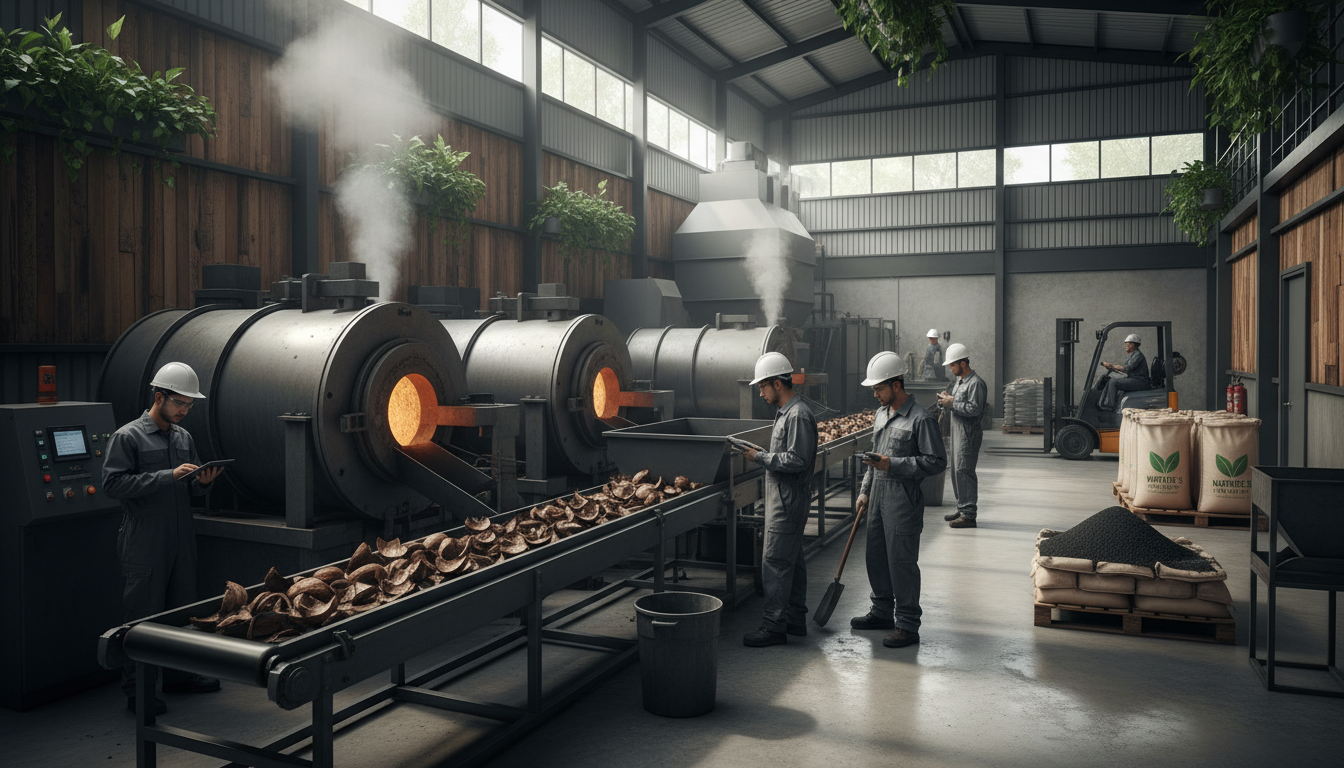
Coconut shell activated carbon has been gaining attention as a green alternative to traditional coal-based filtration materials. But does it actually live up to the eco-friendly claims, or is this just another case of greenwashing? We dug into the latest research to give you a clear picture of where this material stands in 2026.
The short answer: yes, coconut shell activated carbon is significantly more eco-friendly than coal-based options. But there’s more to the story than just “renewable vs. non-renewable.”
What Makes Coconut Shell Carbon Different
Unlike coal, which takes millions of years to form and releases high carbon emissions during mining, coconut shells are agricultural waste. They come from the food industry—coconut oil, coconut water, and desiccated coconut production—which generates about 2.8 billion coconut shells annually just from major producers.
These shells would otherwise end up in landfills or burned openly, creating air pollution. Converting them into activated carbon turns waste into a high-performance filtration material. The coconut trees keep producing shells year after year without being cut down, making this a truly renewable resource.
What sets coconut shell carbon apart is its pore structure. It has about 50% more micropores than coal-based carbon, which means better adsorption for small contaminants like volatile organic compounds (VOCs) and disinfection byproducts. Studies show it can trap nearly twice the amount of benzene per gram compared to coal-based alternatives.
We offer several grades of coconut shell activated carbon, including both granular and powdered forms, each optimized for different purification applications.
Carbon Footprint Comparison: 2026 Data
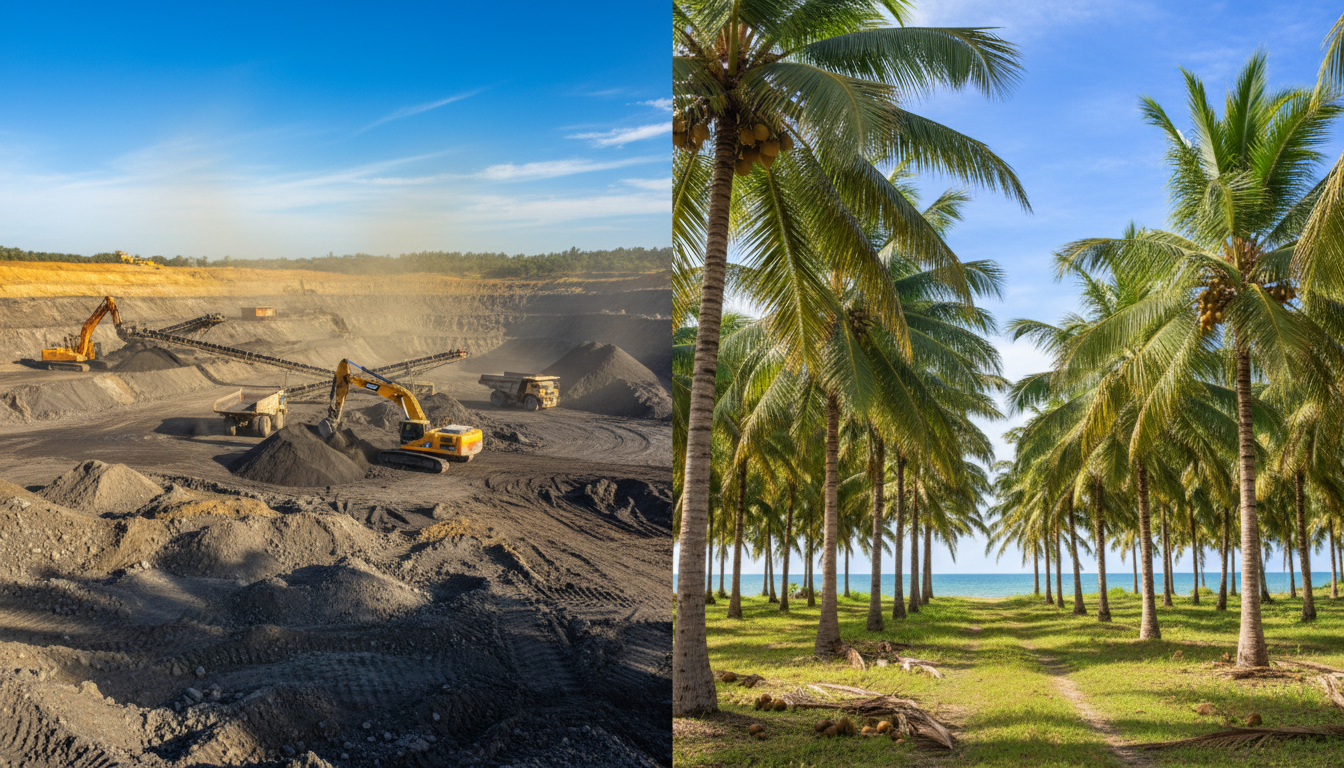
Recent life cycle assessments paint a clear picture. When you exclude biogenic emissions, coconut shell activated carbon produces about 50% lower global warming potential compared to reactivated coal carbon. The production process requires 27.2 MJ of energy and generates just 1.2 kg CO2 equivalent when using sulfuric acid activation.
Coal-based carbon, by contrast, relies on fossil fuel extraction that comes with heavy environmental disturbances and higher greenhouse gas emissions. One study found that using renewable energy sources during coconut shell carbon production can reduce contributions to global warming by up to 80%.
The carbon footprint advantage extends beyond production. Coconut palms naturally absorb CO2 while growing, creating a more carbon-neutral lifecycle. Coal mining operations, meanwhile, continue releasing stored carbon that’s been trapped underground for eons.
Transportation matters too. Processing coconut shells in countries with low-carbon electricity systems can reduce potential global warming impacts by 60% and human toxicity by 90%. This means sourcing decisions have real consequences.
For water treatment specifically, coconut shell carbon expels just 0.0076 pounds per 1,000 gallons of treated water, versus 0.014 pounds for bituminous coal carbon. That’s nearly half the waste.
Renewable Resource vs. Fossil Fuel Reality
Coal is finite. Period. It takes millions of years to form, and we’re extracting it faster than any geological process can replace it. Coconut trees, on the other hand, produce coconuts three times per year in tropical regions where they grow abundantly.
The harvesting process matters too. You don’t cut down coconut trees to collect shells—they’re byproducts from harvesting the fruit. This aligns perfectly with circular economy principles: take something that would be discarded and turn it into something valuable.
Tropical coconut-growing regions benefit economically from this industry. Local communities get jobs in harvesting, charcoal production, and carbon processing, all while supporting environmental conservation. Compare that to coal mining’s well-documented environmental and social impacts.
The purity angle is worth mentioning. Coconut shell carbon contains fewer impurities than coal-based versions. Even unwashed coconut shell carbon has one-third the ash content of acid-washed bituminous coal carbon. This means cleaner production and better performance.
Performance in Real-World Applications
Being eco-friendly doesn’t matter much if the material doesn’t work well. Good news: coconut shell activated carbon excels at purification tasks, especially for drinking water and air filtration.
Its high micropore density makes it perfect for capturing small molecules. Research shows it removes contaminants like chlorine, pesticides, and organic compounds more effectively than coal-based options. For PFAS removal—those “forever chemicals” everyone’s worried about—coconut shell carbon offers distinct advantages due to its renewable sourcing and microporous structure.
The hardness factor is often overlooked. Coconut shell carbon scores higher on ASTM hardness tests, meaning less particle breakdown during use. This translates to longer lifespan, fewer replacements, and reduced overall waste. Water treatment systems need less backwashing, saving both water and energy.
It’s also reactivatable. Used coconut shell carbon can be thermally regenerated and reused, with reactivation producing 80% lower carbon footprint than making virgin carbon. This extends the sustainability advantage even further.
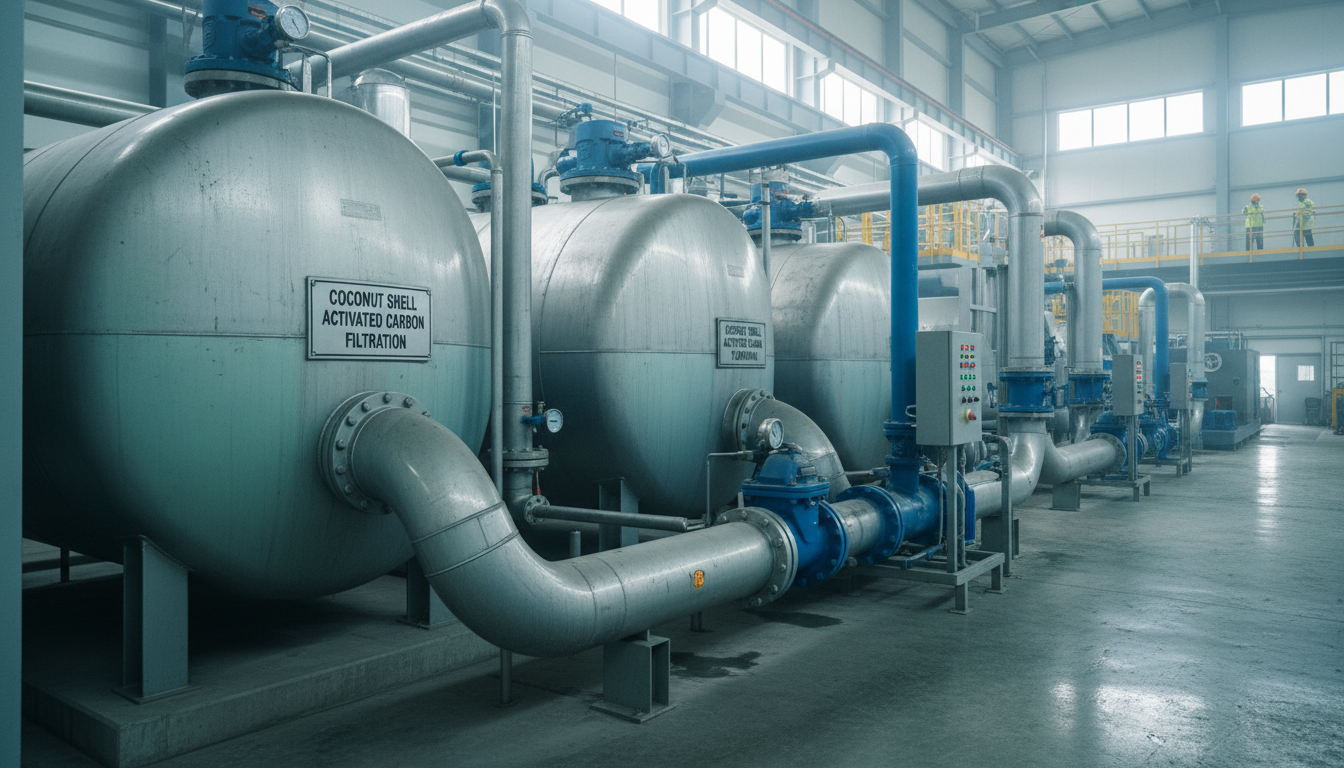
We’ve seen strong results using coconut shell carbon for water purification, particularly in removing taste and odor compounds while maintaining high flow rates.
The 2026 Market Shift
Industries are moving away from coal-based carbon, and the numbers show it. By 2026, renewable-resource activated carbons—including coconut shell, wood, and bamboo—account for about 80% of production at major manufacturers.
Regulatory pressure is driving this. Stricter environmental standards, carbon pricing mechanisms, and corporate ESG commitments all favor renewable materials. Companies can’t ignore their carbon footprints anymore, and switching to coconut shell carbon offers measurable improvements without sacrificing performance.
Municipal water utilities and food and beverage manufacturers are leading the adoption. They need NSF-certified materials that meet drinking water standards while demonstrating environmental responsibility. Coconut shell carbon checks both boxes.
Industrial applications are catching up too. Chemical plants, wastewater treatment facilities, and even firefighting foam cleanup sites are specifying coconut shell carbon for PFAS and organic contaminant removal.
Environmental Impact Categories Explained
Life cycle assessments look at six key impact areas: climate change, fossil depletion, freshwater ecotoxicity, freshwater eutrophication, land use, and net energy.
Coconut shell carbon wins in most categories. Its land use impact is approximately 55% lower than phosphoric acid-activated alternatives. Fossil depletion is negligible since you’re not extracting ancient carbon stores. Freshwater impacts are reduced because the production process—especially with steam or sulfuric acid activation—requires less chemical treatment than coal processing.
Some nuances exist. The activation pathway matters. Sulfuric acid activation shows lower net energy requirements and reduced carbon emissions compared to phosphoric acid routes, though the latter requires slightly less carbon to adsorb the same amount of contaminants.
Energy sources make a difference. Production facilities using renewable electricity or waste heat recovery systems dramatically lower environmental burdens. Some manufacturers now integrate solar power and reclaim heat from carbonization processes.
Limitations and Honest Trade-offs
We’re not going to pretend coconut shell carbon is perfect. It typically costs more upfront than coal-based options, which can be a barrier for price-sensitive applications. The economics improve over time due to longer lifespan and reactivation potential, but that initial investment is higher.
Geographic limitations matter. Coconut shell carbon production concentrates in tropical regions—Indonesia, Philippines, Sri Lanka, India. This means transportation emissions for markets far from production sites. Using local coal-based carbon might make more sense in some locations from a pure carbon footprint perspective, though most analyses still favor coconut shell even with shipping.
Activation methods vary. Not all coconut shell carbon is created equal. Chemical activation processes using harsh acids or bases have their own environmental considerations. Steam activation is cleaner but may produce carbon with different pore characteristics.
Supply chain transparency can be inconsistent. While coconut shells are agricultural waste, ensuring they come from sustainable, ethical sources requires verification. Some producers offer better traceability than others.
Conclusion
Looking at the evidence from 2026, coconut shell activated carbon clearly deserves its eco-friendly reputation. It offers lower carbon footprint, renewable sourcing, reduced waste, and comparable or better performance than coal-based alternatives across most applications.
The environmental advantages are measurable: roughly 50% lower greenhouse gas emissions, renewable resource utilization, circular economy alignment, and reduced land use impact. These benefits matter in a world increasingly focused on sustainability and climate action.
For water purification, air filtration, and industrial applications where micropore density matters, coconut shell carbon delivers both environmental and performance wins. The market shift toward renewable-resource carbons isn’t just trend-following—it’s backed by solid environmental science and practical results.
If you’re evaluating filtration materials in 2026, coconut shell activated carbon represents a responsible choice that doesn’t require performance compromises. The premium cost is offset by longer lifespan, reactivation potential, and alignment with environmental goals that are becoming non-negotiable for many industries.
FAQs
Is coconut shell activated carbon biodegradable?
No, activated carbon itself isn’t biodegradable—it’s nearly pure carbon with a stable structure. However, it’s derived from renewable biomass and can be reactivated multiple times for reuse. At end of life, spent carbon can sometimes be used as soil amendment or fuel, keeping it in productive use rather than landfills. The renewable sourcing is what makes it eco-friendly, not biodegradability.
How does coconut shell carbon compare to wood-based activated carbon for sustainability?
Both are renewable and significantly better than coal. Coconut shell carbon typically has higher micropore density and hardness, making it more durable. Wood-based carbon often has more mesopores, which suits different applications. From a sustainability standpoint, both utilize agricultural or forestry byproducts. Coconut shells have the advantage of being waste from food production, while wood carbon depends on sustainable forestry practices.
Can coconut shell activated carbon remove PFAS from drinking water?
Yes, and it’s increasingly used for this purpose. The microporous structure of coconut shell carbon effectively captures PFAS molecules, including short-chain variants. Performance depends on contact time, bed depth, and specific PFAS compounds present. Many water utilities now specify coconut shell granular activated carbon for PFAS treatment because it balances effectiveness with sustainability goals. Regeneration potential also helps manage the long-term costs of PFAS removal.
Does using coconut shell carbon support deforestation?
No, coconut shells are harvested from existing coconut palms grown for food production. The trees aren’t cut down to collect shells—they’re byproducts from coconut meat, oil, and water industries. In fact, using these shells for carbon production reduces agricultural waste and supports circular economy models. This contrasts sharply with some wood-based carbons where sourcing practices need verification to ensure sustainable forestry.
What’s the typical lifespan of coconut shell activated carbon in water filters?
Lifespan varies based on water quality, contaminant levels, and flow rates. In residential water filters, coconut shell carbon typically lasts 6-12 months. Industrial applications with heavier contaminant loads may need replacement or reactivation every 3-6 months. The key advantage is that coconut shell carbon can be thermally reactivated, restoring 90-95% of its original adsorption capacity. This reactivation produces 80% lower emissions than manufacturing virgin carbon, extending the environmental benefits across multiple use cycles.