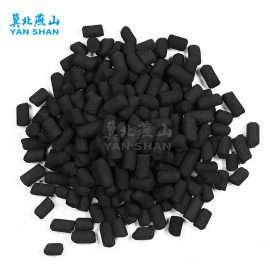

Activated carbon mainly relies on its highly developed pore structure to provide a huge specific surface area for physical adsorption when removing mercury from air and gas. To achieve efficient mercury removal, it is usually necessary to modify activated carbon, such as sulfur impregnation, so that its surface chemicals can react with gaseous mercury to generate stable mercury sulfide, thereby achieving permanent fixation of mercury. This technology is widely used for flue gas purification in industries such as coal-fired power plants, waste incineration, and non-ferrous metal smelting. It can effectively capture various forms of mercury pollutants such as elemental mercury and oxidized mercury, and is one of the most mature and reliable solutions for controlling mercury emissions.
Related Products