


Mining operations worldwide depend on a simple but powerful material to extract gold from ore: activated carbon. This porous substance acts like a microscopic sponge, grabbing onto dissolved precious metals and pulling them out of solution. The process has been the gold standard in mining since the 1970s, and it’s still the most cost-effective method for recovering these valuable resources.
Steam-activated coconut shell carbon stands out for its superior effectiveness in precious metal recovery. Whether you’re working with heap leach solutions or processing complex ore slurries, the right activated carbon can make the difference between profitable operations and leaving money in the tailings.
Why Coconut Shell Carbon Works Best
Not all activated carbon performs equally in metal recovery applications. Coconut shell-based carbons are the most commonly selected type of activated carbon for gold recovery, and there’s good reason for this preference.
Coconut shell activated carbon has a very high hardness and is more abrasion resistant than any other type. This hardness translates directly to better performance in mining circuits. When carbon particles break down into fines, you lose both the carbon itself and any gold it’s carrying. Mechanical strength is important in reducing losses because of attrition. Attrition is the breakdown of material into fines. Not only does this result in carbon loss, but it also causes a loss in recoverable gold.
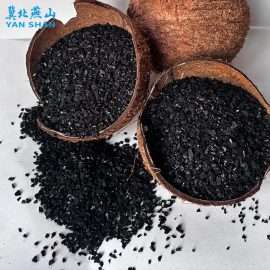
We manufacture coconut shell activated carbon specifically designed to withstand the demanding conditions of metal recovery circuits. The pore structure in coconut shell carbon is also better suited for capturing metal complexes from cyanide solutions. More than 80% of its pore structure consists of micropores—the exact size needed to trap gold-cyanide complexes.
Three Main Recovery Methods
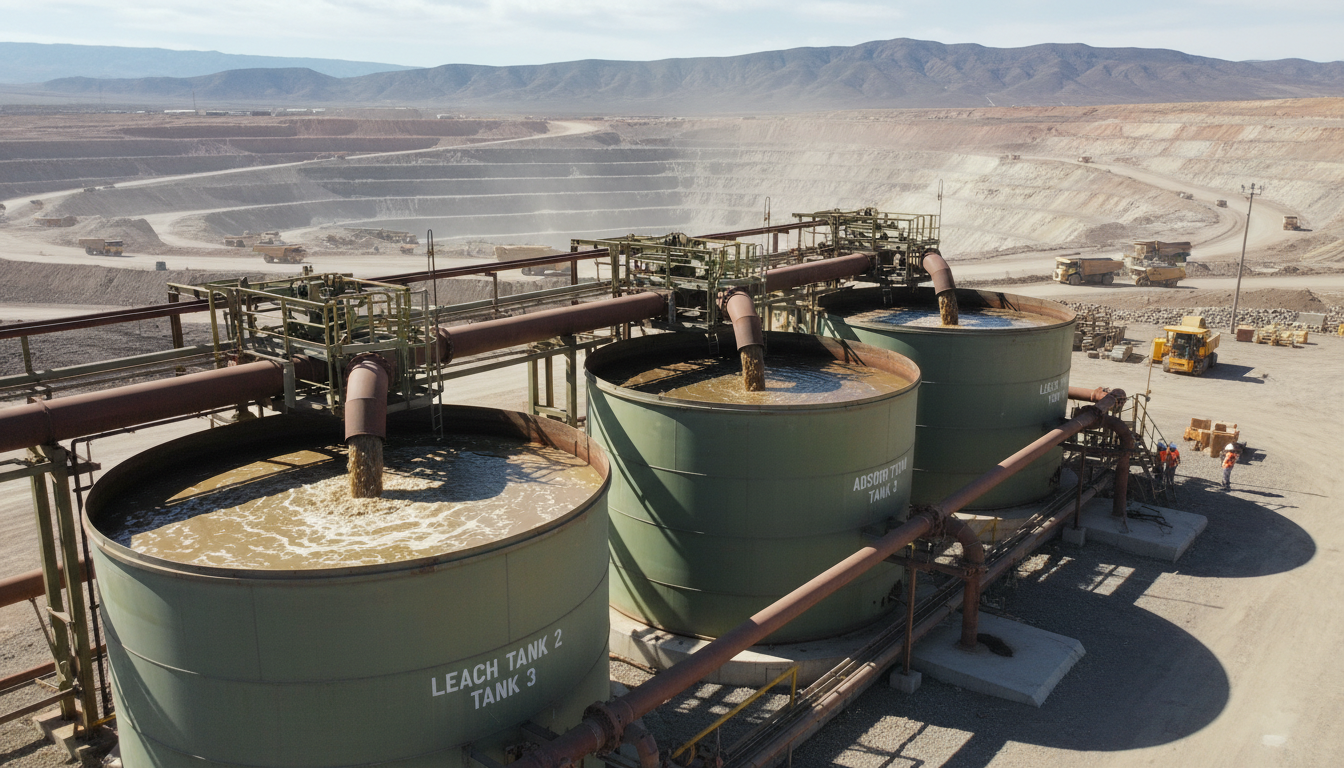
Three main methods utilize activated carbon differently to optimize gold recovery: Carbon-in-Column (CIC), Carbon-in-Pulp (CIP), and Carbon-in-Leach (CIL). Each has specific applications and advantages.
Carbon-in-Column works well for heap leach operations. Fluidized bed carbon columns can process solutions containing as much as 2 to 3 wt% solids, thus making them well-suited for heap leach applications, which are often high in solids. The gold cyanide solution flows upward through columns filled with granular activated carbon, capturing the precious metals as it passes through.
Carbon-in-Pulp starts after the leaching process is complete. The gold extraction process involves finely grinding the ore using a carbon-in-pulp method, where gold is solubilized in tanks through cyanide leaching. Granular activated carbon is added to adsorb gold from the solution. Now loaded with gold, the carbon is separated from the slurry through coarse screening.
Carbon-in-Leach combines both processes into one step. The carbon-in-leach (CIL) process combines the leaching and carbon-in-pulp processes into one operation, eliminating the need for separate tanks. In this process, activated carbon is added directly to the leach tanks, which adsorbs gold almost simultaneously as it dissolves in the cyanide solution. This method shines when dealing with ores that contain organic carbon, which would otherwise compete for the dissolved gold.
What Makes Quality Recovery Carbon
Picking the right carbon for your operation means balancing several performance factors. In choosing an activated carbon for use in gold recovery, the characteristics below are of key importance. These characteristics vary as a result of both the physical and chemical properties of the material, which differ depending upon the source material and processing methods used to produce the activated carbon.
Adsorption capacity tells you how much gold the carbon can hold. Higher loading capacity means fewer carbon changeouts and better recovery rates. The adsorption rate matters too—faster adsorption means higher throughput in your processing tanks.
Particle size requires a careful balance. The smaller the particle size, the more difficult it is to sieve the carbon from the slurry, which can lead to the loss of activated carbon and gold. If the carbon particles are too large, the rate of gold adsorption will be reduced. The particle size of activated carbon used in CIL and CIP plants is therefore a balance between sieving efficiency and gold adsorption rate. Most operations use carbon sized between 6-12 mesh or 5-10 mesh.
Hardness and attrition resistance keep your carbon—and your gold—in the circuit where they belong. Our coal-based activated carbon options also offer good hardness for certain applications, though coconut shell typically outperforms in precious metal recovery.
Recovery and Reuse Cycles
One of the many benefits to using activated carbon is that it is reusable. Instead of purchasing new activated carbon, the saturated carbon can be reactivated and used again. This reusability makes activated carbon even more cost-effective over time.
After the carbon loads up with gold, it goes through an elution process where the metal is stripped off using hot cyanide or other solutions. During elution, an acid wash step helps to partially reactivate the spent carbon by removing some inorganic components. While this does reactivate the carbon to an extent, organic components unaffected by acid must still be removed. Full thermal reactivation can bring the carbon back to near-original performance, allowing it to cycle through the recovery process multiple times.
It is essential that activated carbon used in gold recovery provides excellent process performance, minimal attrition loss and minimal maintenance problems. The quality of your carbon affects every stage of the recovery cycle.
Beyond Gold: Other Precious Metals
While gold gets most of the attention, activated carbon works for recovering silver and other precious metals too. The same adsorption principles apply, though the chemistry varies slightly depending on the metal and leaching agents used.
E-waste contains trace amounts of precious metals like gold, silver, and palladium embedded in electronic components. Through complex processes involving activated carbon, these metals can be separated and recovered, providing sustainable solutions for resource recovery. This application is growing as industries look for ways to reclaim valuable materials from electronic waste and industrial streams.
Our powdered activated carbon products can also play a role in certain specialty recovery applications where surface area and contact time matter most.
Conclusion
Precious metal recovery carbon remains the backbone of modern mining operations. Coconut shell activated carbon leads the field thanks to its hardness, optimal pore structure, and ability to withstand repeated regeneration cycles. Whether you’re running a Carbon-in-Column, Carbon-in-Pulp, or Carbon-in-Leach operation, the quality of your activated carbon directly affects your recovery rates and profitability.
The key is matching the right carbon specifications to your specific ore characteristics and processing method. Look for products with proven hardness, appropriate particle size distribution, and high adsorption capacity. With proper carbon selection and management, you’ll recover more metal while keeping operating costs under control.
FAQs
What is precious metal recovery carbon?
Precious metal recovery carbon refers to specially manufactured activated carbon used to extract gold, silver, and other valuable metals from ore solutions. The carbon’s porous structure adsorbs dissolved metal complexes from cyanide leaching solutions, allowing miners to separate and recover these metals. Coconut shell-based activated carbon is the most common type used because of its hardness and optimal pore size.
How does activated carbon extract gold from ore?
After ore is crushed and mixed with a cyanide solution, the gold dissolves into the liquid. Activated carbon is then added to this solution, where it adsorbs the gold-cyanide complex onto its porous surface. The gold-loaded carbon is separated from the slurry through screening, then the gold is stripped off through elution using hot solutions. This recovered gold can then be processed into pure metal.
Why is coconut shell carbon better than coal-based carbon for gold recovery?
Coconut shell activated carbon has superior hardness and abrasion resistance compared to coal-based options. This means less carbon breaks down into fines during processing, reducing both carbon loss and gold loss. The micropore structure of coconut shell carbon is also better suited for capturing gold-cyanide complexes. While coal-based carbon works for some applications, coconut shell typically delivers better recovery rates and longer service life in precious metal circuits.
Can activated carbon be reused in metal recovery operations?
Yes, activated carbon can go through multiple cycles of adsorption and regeneration. After the gold is stripped off through elution, the carbon undergoes acid washing and thermal reactivation to restore its adsorption properties. This reusability makes activated carbon more economical over time. Quality coconut shell carbon can withstand many regeneration cycles while maintaining good performance, though some degradation occurs with each cycle.
What particle size of activated carbon works best for gold recovery?
Most gold recovery operations use activated carbon sized 6-12 mesh (1.68-3.36 mm). Smaller particles offer faster gold adsorption but are harder to separate from the slurry and more prone to loss. Larger particles are easier to screen but adsorb gold more slowly. The optimal size balances adsorption rate with screening efficiency for your specific circuit design and ore characteristics.