

Advantages:
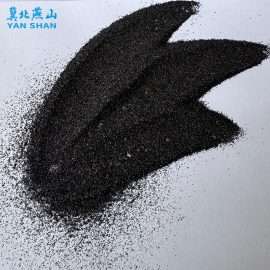
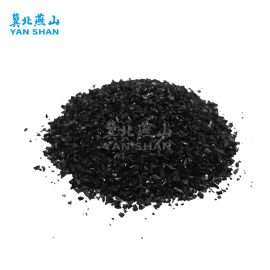
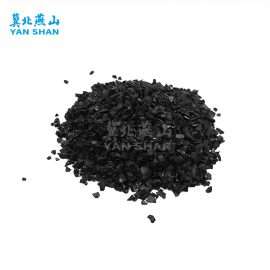
Our gold-adsorbing carbon delivers metal recovery with exceptional loading rates. The optimized mesopore distribution enables rapid kinetics even in high-throughput circuits. With its superior hardness rating, it resists attrition during regeneration cycles, reducing carbon fines and gold losses. Mining operations appreciate its low ash content that minimizes scale formation on heating elements. The controlled particle size distribution prevents screen blinding and ensures consistent bed permeability. Apricot shells offer better cost-performance compared to coconut shells.. The agricultural byproduct origin provides sustainable sourcing advantages and carbon footprint reduction benefits for ESG-conscious operations.
Parameter:
The following is the parameter information of the gold activated carbon we mainly produce. We can also customize according to the iodine value and specifications you need.
| Item | unit | GradeA | GradeB |
|---|---|---|---|
| Specification 4-8、5-10、6-12 Mesh | % | ≥97 | ≥93 |
| Iodine Adsorption Value | mg/g | ≥1000 | ≥900 |
| Abrasive Resistance | % | ≥99 | ≥98 |
| Loss on Drying | % | ≤10 | ≤10 |
| Packed Density | g/ml | 0.48-0.55 | 0.48-0.55 |
Application:
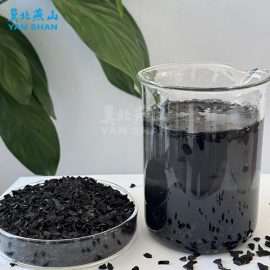
Large-scale gold mines rely on our carbon for processing low-grade ores economically. Small-scale artisanal miners use it to maximize recovery from limited resources. E-waste recyclers depend on our carbon for capturing gold from electronic component leaching. Jewelry manufacturers incorporate it into waste stream treatment systems. Pharmaceutical companies producing gold-based medications choose our carbon for process stream recovery. Electroplating facilities utilize it for reclaiming gold from rinse waters. From primary heap leach operations to tailings reprocessing projects, our apricot shell gold-adsorbing carbon effectively captures gold cyanide complexes, maintains activity through multiple adsorption-desorption cycles, and delivers exceptional elution performance—maximizing recovery rates while minimizing operational costs in both large commercial operations and smaller specialized applications where maximizing yield from every ton of material processed drives profitability.


Carbon-in-Pulp (CIP) Process: Efficient Gold Adsorption from Leached Slurry
The Carbon-in-Pulp (CIP) process is a widely used method for gold recovery following cyanide leaching. The process begins with ore that is finely ground and then subjected to gold dissolution in a series of agitated cyanide leach tanks. Once leaching is complete, the resulting slurry, containing the dissolved gold, is transferred to a dedicated CIP adsorption circuit.
This circuit typically consists of a cascade of five or six agitated tanks. Granular activated carbon is introduced into this series of tanks, where it moves counter-currently to the flow of the leached slurry. This staged, counter-current contact is a key feature of the CIP process, ensuring that the freshest carbon meets the solution with the lowest gold concentration, thereby maximizing the efficiency of gold adsorption. As the carbon adsorbs the gold from the slurry solution, it becomes progressively loaded with gold. The gold-laden carbon is then mechanically separated from the barren slurry through coarse screening, ready for the gold elution (stripping) stage. This highly efficient system achieves high gold recovery rates by optimizing the concentration gradient between the carbon and the solution.
Carbon-in-Leach (CIL) Process: A Combined Leaching and Adsorption Method
The Carbon-in-Leach (CIL) process is an efficient gold extraction method that integrates leaching and adsorption into a single operational step. Instead of using separate tanks, the leaching tanks are equipped with carbon retention screens, eliminating the need for a dedicated carbon-in-pulp (CIP) circuit. In this process, activated carbon is introduced directly into the leach tanks, allowing for the nearly simultaneous dissolution of gold by cyanide and its immediate adsorption onto the carbon.
This method is particularly advantageous for processing gold ores containing native carbon (often present as organic matter). The native carbon can prematurely adsorb the dissolved gold (a phenomenon known as “preg-robbing”), leading to significant gold losses and lower recovery rates. In the CIL process, the added activated carbon acts as a preferential adsorbent, effectively competing with the native carbon to capture the gold. This ensures that the gold is successfully loaded onto the activated carbon, from which it can later be recovered through a stripping process.
Chengde Jibei Yanshan Activated Carbon Co., Ltd. is a modern activated carbon production enterprise integrating R&D, production and sales, with rich production experience and advanced technology, and is committed to providing customers with high-quality activated carbon products and perfect solutions.
Please contact us for your gold-adsorbing activated carbon solutions!
In addition to this product, our factory also has many other uses of activated carbon. Click below to browse more of our products.