

You spent good money on high-quality coconut shell activated carbon. But if you store it wrong, you might as well toss that investment in the trash. Proper storage keeps your carbon performing at full capacity, and this guide shows you exactly how to do it right.
At Yanshan Carbon, we’ve been manufacturing and shipping activated carbon for over 35 years. We’ve seen what happens when customers nail their storage setup—and what happens when they don’t. Our team packages and ships tens of tons of coconut shell activated carbon every single day, so we know firsthand what it takes to keep this material in peak condition from the warehouse floor to the final application. This guide pulls together everything we’ve learned about storing activated carbon so you can protect your product and get the most out of every bag.
Why Proper Storage Matters for Activated Carbon
Here’s the thing about coconut shell activated carbon: it’s designed to adsorb. That’s literally its job. The internal surface area on a single gram of quality coconut shell carbon can reach 500 to 1,500 square meters. All those micropores are ready and waiting to grab onto molecules—whether those molecules come from contaminated water, dirty air, or the humid warehouse air sitting around the bag.

If you leave activated carbon exposed to the environment before you actually use it, it starts working before you want it to. It pulls in moisture, volatile organic compounds, dust, odors, and anything else floating around. By the time you open that bag for your gold recovery system or water treatment plant, you’ve already lost a chunk of your carbon’s adsorption capacity. That means lower performance, shorter service life, and more frequent carbon replacement—all of which cost you money.
The micropore structure that makes coconut shell carbon so effective is the same thing that makes it vulnerable during storage. As we explain in our complete production guide for coconut shell activated carbon, manufacturers go through extensive washing, drying, and quality testing to get the moisture content down to 5–10% before packaging. If that moisture climbs back up during storage, you’re undoing the work that went into making the product. Keeping your carbon dry and sealed isn’t optional—it’s the baseline for protecting your investment.
Best Storage Conditions for Coconut Shell Activated Carbon
Getting the storage environment right comes down to a few simple factors: temperature, humidity, airflow, and contamination control. Miss any one of these, and your carbon takes a hit.
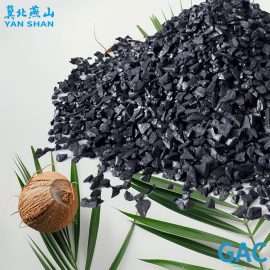
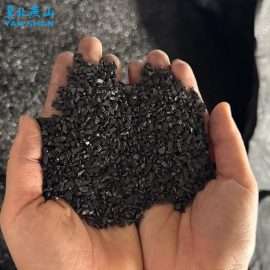

Temperature should stay between 35°F and 110°F (2°C to 43°C). Extreme cold won’t damage the carbon structure itself, but freeze-thaw cycles can introduce condensation inside the packaging. Extreme heat accelerates the release of any adsorbed moisture and can cause quality issues over time. A climate-controlled or shaded, well-ventilated warehouse works fine for most operations. You don’t need anything fancy—just avoid leaving pallets baking in direct sunlight or sitting in an unheated shed through winter.
Relative humidity is the bigger concern. Keep it below 50% if possible, and definitely below 65%. Activated carbon is hygroscopic, meaning it naturally pulls water vapor from the air. In a humid environment, sealed bags can still pick up moisture through micro-perforations, seam gaps, or during handling when bags are briefly opened. If you’re in a region with high ambient humidity—think the Gulf Coast, Southeast, or Pacific Northwest—consider running dehumidifiers in your storage area or using desiccant packs inside palletized wrapping.
Airflow and contamination matter more than most people think. Store your activated carbon away from chemicals, solvents, fuels, paints, and anything with a strong odor. Carbon doesn’t care what it adsorbs—it will grab gasoline fumes just as easily as the gold you actually want it to capture. Good ventilation prevents the buildup of airborne contaminants near your stored carbon. At the same time, keep the storage space clean. Dust, debris, and particulates can settle on packaging and work their way inside during handling.
Here’s a quick reference table for ideal storage conditions:
| Storage Factor | Recommended Range | Why It Matters |
|---|---|---|
| Temperature | 35–110°F (2–43°C) | Prevents condensation and thermal degradation |
| Relative Humidity | Below 50% (max 65%) | Limits moisture uptake into pores |
| Ventilation | Moderate, consistent airflow | Prevents buildup of airborne contaminants |
| Chemical Proximity | At least 15 feet from solvents/fuels | Stops premature adsorption of VOCs and odors |
| Sunlight Exposure | None (indirect light only) | Avoids heat buildup on packaging |
How to Store Activated Carbon Long Term
Short-term storage—a few weeks between delivery and use—is straightforward. Keep the bags sealed and dry, and you’re good. Long-term storage, anything beyond three months, takes a bit more planning.

First, leave the original packaging intact as long as possible. At Yanshan, we pack our coconut shell activated carbon in double-layer woven bags—25kg bags for smaller orders and 500kg or 1,000kg jumbo bags for bulk buyers. That packaging is specifically designed to block moisture and protect the product during shipping and storage. Cutting bags open “just to check” or resealing them with tape introduces air exposure every time. If you need to inspect a shipment, sample from one bag and reseal it tightly with heat sealing or industrial-grade moisture-resistant tape. Don’t open multiple bags unless you’re going to use them right away.
Second, elevate your storage. Never place bags directly on a concrete floor. Concrete wicks moisture from the ground, and that moisture transfers into your carbon over weeks and months. Use wooden pallets, plastic pallets, or raised racks to keep bags at least 4 to 6 inches off the floor. This also helps with airflow underneath the pallets and makes inventory management easier.
Third, consider overwrapping pallets with stretch wrap or shrink wrap for an additional moisture barrier. This is especially helpful in humid climates or when storing carbon outdoors under covered areas. Some operations go a step further and use vacuum-sealed or nitrogen-flushed packaging for specialty carbon grades, though standard sealed bags work well for most coconut shell granular activated carbon and powdered activated carbon applications.
For really long storage periods—six months or more—it’s smart to rotate your inventory on a first-in, first-out (FIFO) basis. Label each pallet with the delivery date and production batch number. Use the oldest stock first. Properly stored coconut shell activated carbon can maintain its quality for two to three years, but why push it? Rotating stock keeps your carbon fresh and your results consistent.
Common Storage Mistakes That Ruin Activated Carbon
We’ve worked with mines, water treatment facilities, and industrial plants across the globe. And we see the same storage mistakes over and over again. Here are the ones that cost people the most money.
Leaving bags open or poorly sealed. This is the number one issue. Someone opens a bag, uses part of it, and then folds the top over or clips it with a binder clip. That’s not a seal. Air and moisture move freely through the opening, and the remaining carbon starts losing capacity immediately. If you open a bag and don’t use it all, transfer the leftover carbon into an airtight container—a sealed plastic drum, a zip-lock industrial bag, or any container with a gasket lid. Do it right away, not at the end of the shift.
Storing carbon near chemicals or strong odors. We mentioned this already, but it’s worth repeating because it happens all the time. We’ve seen pallets of gold recovery carbon stored in the same warehouse bay as diesel fuel drums. That carbon showed up at the mine with reduced adsorption capacity and an odor that told the whole story. Activated carbon doesn’t discriminate—it adsorbs whatever’s in the air. Keep it isolated from anything you wouldn’t want inside your carbon pores.
Ignoring the floor. Direct ground contact is a silent killer for stored carbon. Moisture wicks up through concrete and into the bottom bags on a pallet. Over a few months, those bottom bags can gain 5–10% moisture, dropping their performance noticeably. Use pallets. Always. Even in dry climates, the temperature differential between a cool concrete floor and warmer air creates condensation risk.
Outdoor storage without protection. Storing carbon outside under a tarp might work in an emergency, but it’s not a long-term plan. Tarps trap moisture, create condensation pockets, and don’t protect against temperature swings. If outdoor storage is your only option, use a covered structure with open sides for ventilation and keep pallets wrapped tightly.
How to Tell If Your Activated Carbon Has Gone Bad
Activated carbon doesn’t “expire” the way food does, but it absolutely loses effectiveness when stored improperly. Here’s how to spot carbon that’s been compromised before you dump it into your system.

Weight gain. If a 25kg bag suddenly weighs 27 or 28 kg, that extra weight is almost certainly moisture. Weigh a sample bag from each pallet and compare it against the labeled weight. Anything more than 10–12% over the net weight suggests the carbon has picked up too much water. You can dry it out in some cases, but that adds cost and time.
Odor. Fresh coconut shell activated carbon should have a faint, clean, slightly carbon-like smell—or no smell at all. If you open a bag and detect chemical odors, musty smells, or anything unusual, the carbon has adsorbed contaminants from the environment. Depending on what it picked up, this carbon may not perform to spec in your application.
Reduced iodine number. If you have access to testing equipment or can send samples to a lab, checking the iodine number is the most reliable way to assess whether storage has affected your carbon. Quality coconut shell activated carbon from Yanshan typically tests between 900 and 1,200 mg/g for iodine number when freshly produced. If a stored sample comes back significantly lower—say below 800 mg/g—the carbon has lost adsorption capacity. Other tests like the BET surface area measurement and moisture content analysis can confirm the picture.
According to the American Water Works Association (AWWA), activated carbon that has been exposed to ambient air for extended periods can lose 10–20% of its adsorption capacity before it’s ever put into service. That’s a significant performance drop, and it’s entirely preventable with proper storage.
Storing Granular vs. Powdered Activated Carbon
Not all coconut shell activated carbon stores the same way. Granular and powdered forms have different handling needs, and knowing the difference saves you headaches.
Granular activated carbon (GAC) is the more forgiving format. The larger particle size means less surface area is exposed to the air at any given time, and granules don’t clump or cake as easily in the presence of moisture. GAC bags are less prone to dusting, which makes them easier to handle and store. Standard sealed bags on pallets in a dry warehouse will keep granular coconut shell carbon in good shape for years. Just watch for crushing—don’t stack pallets more than three high unless the bags are designed for it, because the weight can fracture granules and create fines that affect performance.
Powdered activated carbon (PAC) is trickier. The fine particle size means enormous surface area exposure per unit of volume, which makes PAC much more sensitive to moisture and airborne contamination. PAC also tends to absorb water faster and can clump or harden into a brick-like mass if humidity gets too high. Store powdered carbon in tightly sealed containers with minimal headspace. If you’re in a humid region, adding desiccant packs inside the sealed container is a worthwhile precaution. Handle PAC bags carefully—tears and punctures expose the fine powder to the environment instantly, and once it’s contaminated, it’s hard to fix.
Both forms benefit from the same basic principles: keep them sealed, dry, cool, and away from contaminants. But PAC demands a bit more attention and tighter controls. If you’re buying bulk powdered carbon, plan your storage capacity before the shipment arrives so you’re not scrambling to find a spot that meets the requirements.
Best Containers and Packaging for Activated Carbon Storage
The container you use matters just as much as the environment you store it in. Here’s what works and what doesn’t.

Original manufacturer packaging is your best first option. At Yanshan, our 25kg and 500kg bags use moisture-resistant woven material that’s tested for durability and protection during shipping. Keep your carbon in these bags until you’re ready to use it. They’re designed for this exact purpose.
Sealed plastic drums with gasket lids work great for partial bags or smaller quantities. HDPE drums in 30-gallon or 55-gallon sizes are popular in water treatment plants and laboratories. Make sure the drum is clean and dry before transferring carbon into it. A dirty drum introduces the exact contaminants you’re trying to avoid.
Steel drums or containers are fine for short-term storage but can introduce moisture through condensation on the metal walls, especially in environments with temperature swings. If you use steel, line the interior with a polyethylene bag first.
Avoid cardboard boxes for anything beyond a day or two. Cardboard absorbs moisture, weakens over time, and offers zero protection against airborne contaminants. We’ve seen customers repackage carbon into cardboard for convenience, only to find the bottom of the box damp and the carbon compromised a month later.
For industrial-scale storage, some facilities use dedicated carbon silos or sealed hoppers connected directly to their process systems. These setups minimize handling, reduce contamination risk, and keep the carbon sealed until it’s needed. If you’re running through large volumes on a regular schedule, a silo system is worth the upfront investment.
Shelf Life of Coconut Shell Activated Carbon
One of the most common questions we get is “how long does activated carbon last in storage?” The answer depends almost entirely on how you store it.
Properly stored coconut shell activated carbon—sealed, dry, cool, and isolated from contaminants—maintains its adsorption properties for two to three years without noticeable degradation. Some well-stored carbon has been tested after five years and still performed within spec. The carbon structure itself doesn’t degrade over time. It’s external factors like moisture, heat, and contamination that reduce performance.
On the flip side, poorly stored carbon can lose effectiveness in just weeks. An open bag in a humid, chemical-laden warehouse might lose 15–20% of its capacity in a month. That’s not a slow decline—it’s a fast one. The takeaway is simple: storage conditions, not calendar dates, determine shelf life.
If you’re unsure about the quality of stored carbon, test it before use. Run an iodine number test, check moisture content, and inspect for odor or visual changes. It takes a few minutes and can save you from dumping compromised carbon into a process that depends on peak performance.
FAQs
Does activated carbon expire if the bag stays sealed?
Sealed coconut shell activated carbon does not have a strict expiration date. When packaging stays intact and storage conditions are dry and clean, the carbon holds its adsorption capacity for two to three years—sometimes longer. The micropore structure doesn’t break down with age. Problems start only when moisture, heat, or airborne contaminants reach the carbon.
Can you store activated carbon outside?
You can, but only under a covered structure with good ventilation and with pallets fully wrapped in moisture-resistant material. Direct exposure to rain, sun, or ground moisture will degrade the carbon quickly. Outdoor storage should always be a temporary solution. A dry indoor warehouse with consistent temperature is always the better choice.
How do you keep activated carbon from absorbing moisture?
Keep bags sealed tightly, store them off the ground on pallets, maintain warehouse humidity below 50%, and wrap pallets in stretch film for an extra barrier. For powdered carbon or high-value specialty grades, use desiccant packs inside sealed containers. The goal is to minimize air contact until you’re ready to put the carbon to work.
What happens if activated carbon gets wet?
Wet activated carbon doesn’t get destroyed, but water fills the pores that should be available for adsorption. This directly reduces the carbon’s performance. Slightly damp carbon can sometimes be dried and restored, but soaked carbon—especially if contaminated with dirty water—usually needs to be replaced or professionally regenerated. Prevention is always cheaper than recovery.
How should you dispose of used or contaminated activated carbon?
Used or contaminated coconut shell activated carbon should be disposed of according to local environmental regulations. In many cases, spent carbon can be sent to a specialized facility for thermal reactivation, where it’s heated to high temperatures to burn off adsorbed contaminants and restore pore structure. If reactivation isn’t practical, disposal as non-hazardous solid waste is typically acceptable unless the carbon contains regulated contaminants like heavy metals. Check with your local waste management authority for specific requirements.